“Death and Taxes: Taking Causal Inference into the Real World”

Nandita Mitra is giving a webinar this Tuesday at noon with the above title and the following abstract:

Statisticians develop methods with the hope that they will ultimately inform decisions and improve the world around us. But taking causal inference into the real world requires more than choosing the right estimator: it requires identifying the question that matters, engaging deeply with its context, and communicating statistical reasoning to very different audiences.

In this talk, I will draw on two experiences in which causal inference took me well beyond traditional statistical applications. I will first discuss my experience serving as an expert witness in a death penalty case involving racial disparities in jury selection, where ideas including confounding, mediation, and individual- versus population-level effects had to be translated into compelling and understandable arguments in a court of law. I will then describe my involvement in evaluating Philadelphia’s excise tax on sweetened beverages, where cross-border purchasing led us to confront interference and develop methods to better inform policy decisions.

Through these examples, I will reflect on how statisticians can seek opportunities to bring their expertise to consequential real-world problems, and on the importance of collaboration, communication, and stepping outside our usual academic boundaries. Most importantly, you don’t have to choose between being a methodological statistician and having an impact outside statistics.

This looks interesting. Click on the link above to register for the talk and get the zoom link.

“I write to seek your help and advice regarding a published article that my group and I believe is invalid and should be corrected or retracted.”

David Allison writes:

I write to seek your help and advice regarding a published article that my group and I believe is invalid and should be corrected or retracted. Despite our concerns, the editor seems to be unwilling to accept responsibility and to be responding to us in a way that we perceive as unethical.

You may wish to see a full account on this matter including the Letter to the Editor (LTE) that was rejected by the journal [Di Molfetta et al LTE (short version) Submit.pdf (attached)], our email exchange with the editor following its rejection [Diabetes Research and Clinical Practice Editor Email Exchange.pdf (attached)], and our email exchange with the authors and editor prior to submitting the LTE [Di Molfetta Email Exchange.pdf attached)], but a succinct summary of the events are provided below for brevity:

07/30/2023: We identified a paper as having errors related to not properly analyzing cluster randomized trial data.
08/08/2023: We contacted the original study authors and requested the deidentified data to reproduce the published results.
08/21/2023: The authors requested clarification for the reason for the data request.
08/21/2023: We provided clarification for the data request.
09/22/2023: We prompted the authors to reply to our prior communication.
09/30/2023: We included the editor in the email exchange requesting that they uphold the journal’s data sharing policy.
10/14/2023: We prompted the editor to reply to our prior communication.
10/14/2023: The editor replied and asked for clarification for the reason for the data request.
11/03/2023: We clarified that we requested the data to reproduce the analyses and re-analyze the data using the correct statistical methods for the study design. We also provided a summary of the errors we identified.
11/23/23: The authors replied with their rebuttal to sharing the data, rationalization for their errors, and rationale for not correcting them.
04/29/24: We submitted a letter to the editor to the original journal.
05/01/24: The manuscript was rejected on the basis that our “paper cannot be assigned sufficient priority to allow publication.”
05/08/24: We wrote to the editor directly to reconsider publication of our letter.
05/09/24: The editor responded that the journal does not wish to be engaged in a legal issue and that the matter will not be entertained by the journal any longer.
05/10/24: We responded to the editor to clarify that we simply want the journal to publish our letter and had not proposed any legal action.

The editor has not responded to our last communication as of 05/21/24.

We believe that the most recent response from the editor is patently unethical and incommensurate with the publishing standards of Elsevier, guidelines of COPE, and generally accepted norms in the field of science.

We have two requests:

1. Do you have any advice for us on how we might best pursue this issue further.

2. Would you be willing to blog about this item? If so, you might compare and contrast it with another recent case we pursued [BMC Public Health LTE Example.pdf (attached)] which was an exemplar situation where the journal was responsive to the ethical issues we raised.

I don’t have any advice on what they should do! The flood of bad research is just so overwhelming. But I can blog it. So I did.

David Allison often works in nutrition science, an area where our government is spreading misinformation that is then sane-washed in the news media. And, along with all that, there’s so much uncertainty and variation that it’s hard to know what to think or do.

Our continuing struggles with the Monster model

tl;dr. We’re still stuck.

It was 30 years ago that Frédéric Bois, Jiming Jiang, and I published our paper on hierarchical modeling for toxicology. It was a successful paper–it’s been cited over 400 times! It won a major award! More important for me was that working on this project gave me a much better understanding of several different areas of Bayesian inference and computation. I think the greatest impact of this paper has been on informing my thinking, giving me a perspective which has then spread through my research articles, textbooks, and software. I don’t know that it our approach is used much in toxicology, as it took a lot of work just for that one example.

The example is a study of the population toxicokinetics of tetrachloroethylene. Here’s the applied paper with details of the model, and here’s the statistics paper with an explanation of how we did the Bayesian modeling and inference.

The data come from an experiment with 6 people, and for each person there is a multi-compartment model set up as a differential equation with about 15 parameters, and then we had a hierarchical model to allow these parameters to vary by person. We did the computation using Gibbs and Metropolis with a differential equation solver in there too. You can check out the above-linked paper to see how we set up priors and checked the fit of the model to data.

Back in 1993 or 1994 or whenever, it took a lot of work to fit the model. Frédéric programmed it in an C program he wrote called mcsim. But finally it did work, the model fit the data and made reasonable predictions, and we published the papers. As I said, it was a lot of effort for just one toxin, but the work served as proof of concept for the use of Bayesian methods for a complicated model that could not be fit using standard approaches given the sparse data that were available.

I put the example in Bayesian Data Analysis, and then eventually I wanted to fit the model in Stan. When using an example for teaching, it’s good to be able to run the code directly, rather than just pointing to graphs in a published paper.

But it wasn’t so easy to fit the model in Stan! It seems that there are some difficulties with identification of the parameters; perhaps this is one of those cases where computation works ok with a crude algorithm (random-walk Metropolis), but then when you switch to a better algorithm (Hamiltonian Monte Carlo), complexities arise. It’s like picking up a rock and seeing all the worms underneath.

We had some discussion of the problem on the Stan Forums a few years ago. As part of that conversation, Charles Margossian wrote:

It has a lot of moving parts: a stiff ODE that is highly sensitive to parameter values, sparse data, a low number of patients (which makes it it difficult to estimate inter-individual variability), hierarchies across multiple parameters, etc. The workflow is complicated by the fact each model fit takes several hours, even after firing up the cluster and parallelizing within chains.

I [Charles] fitted simplifications of the model and got reasonable results. Fixing one or two parameters, or the population variance greatly simplifies the problem. The full model returns divergent transitions and I haven’t found the right parameterization. I tried monolithic centering and non-centering, and things in between. I now suspect the problematic geometry may not be only due to the interaction between population and patient parameters. It’s indeed possible to have a funnel between population parameters, in which case no parameterization can help you. Divergences aside, I don’t trust the estimated parameters, because there are somewhat inconsistent with the priors which were very carefully constructed. Truncating priors, as was done in the original paper, limits our ability to reparameterize the model. When using truncation, I find a lot of the probability mass concentrates at the boundary (note that on the unconstrained scale, you actually have infinite volume near the boundary). All that said, you shouldn’t need to truncate the priors, because the truncation occurs at the tail of the prior distributions.

The original paper didn’t use HMC, so they didn’t have access to diagnostics such as divergent transitions. You can also imagine how an accept-reject sampler will interact differently with a truncated distribution.

To sum up, I agree this would make a very good case study and writing it has been my ambition for some time. But it’s a challenging model to fit, with behaviors I don’t fully understand (yet). There exist other examples of hierarchical ODE models, built and used with Stan, which can be considered, if the goal is to write a case study. But yes, I think we have a lot to learn from the Monster model.

Lots more in that thread, including this plea from me:

I’d be soooo happy if someone could get the Monster model running in Stan. It’s a great example but it would be so much better if it were runnable. Also it’s buggin the hell out of me that we could it just fine using Metropolis 25 years ago but now we’re getting stuck when using a much better algorithm on computers that are a zillion times faster. So I’d really really really like to get this one straightened out. Anyone who can do this, I promise you a free homemade loaf of bread, an advance look at some blog posts 6 months in the future, and pretty much whatever else you want from me.

We’re still not there yet, and I don’t know the full story. The above offer still stands. Here are the data and some code from Charles.

I’m sharing this example for two reasons:

1. I’d still like to fit the model in Stan. Not just to show off Stan, but because if the model is in Stan, it’s portable. Other people can use it for other, similar, problems. It would be a good teaching example (even though now it’s too late for it to be included in the Bayesian Workflow book). And, given that we did have problems with the computing, it would be good to know what it takes to get the model to work.

2. It’s good to have examples of our fallibility. Of course I’ll share the successes (see here) but the struggles are important too.

P.S. to Bob: I hope you appreciated the careful use of capitalization to convey meaning in the title of this post.

Hey—we’re hiring two postdocs!

I’ll post more formal ads soon, but, very briefly:

One project is on generalization for causal inference with a focus on education research, following up on MRPW: Regression, poststratification, and small-area estimation with sampling weights.

The other project is on Bayesian inference in scientific workflow with a focus on contamination models, following up on this work on design and analysis of bioassays.

Both projects are application-focused—that’s how we do statistics—but the importance of this work is not at all limited to these particular applications. This research will have relevance in policy analysis, medicine, and scientific measurement and inference more generally/

Further details soon.

When are Causal Inference Methods Needed to Answer Causal Questions?

Earlier this year we discussed Donna Spiegelman’s talk, “Rethinking SUTVA and Causal Identification: An Epidemiologist’s Perspective,” which she summarized as follows:

She’s giving a followup talk online on Mon 12 Oct, 3:30pm. Here’s the abstract:

When do specialized causal inference methods add value beyond standard approaches? Drawing from her unique perspective as both an epidemiologist and a biostatistician, Donna Spiegelman will consider the circumstances under which commonly invoked causal assumptions are necessary for causal inferences to be validly made from data, concluding that often not. She will show that valid learning can occur 1) under conditions much less restrictive than required by current widely used methods, 2) when real world implementation of interventions vary, and 3) when interventions spill over to others not directly exposed, thereby obviating components of the SUTVA assumption. She will provide evidence that measurement error is the major source of bias in observational research, not confounding, whose bias is rather tightly bounded. Finally, she will discuss the eternal challenge in science: after exhaustive efforts to collect data to predict important outcomes, a substantial proportion of the variation in occurrences of these outcomes appear to be entirely random.

The talk will be followed by a discussion. Click on the link to register (or show up in person if you’re at Yale).

I guess this is what they mean when they talk about “reactionary centrism”: Corruption of government facilitated by enablers in intellectual society

Sometimes left-wing writers use the term “reactionary centrist,” and it always irritates me. Someone’s a centrist, but you’re calling him a “reactionary” just because he doesn’t agree with you on every issue? I get it that people on the left are annoyed by people on the center-left, just as people on the right get annoyed by “RINOs,” but the whole framing bothers me as being so imprecise, seemingly deliberately so. Just as so-called RINOs typically support the vast majority of Republican positions, the so-called “reactionary centrist” aren’t reactionary; they’re centrists, and it should be enough for leftists to disagree directly for those reasons.

But then I came across an article, ‘Zombified’ C.D.C., Hobbled by Cuts, Struggles to Fulfill Scientific Mission, in today’s paper that made me rethink this. The article is subtitled, “The agency has lost its independence and nearly a third of its staff, as Health Secretary Robert F. Kennedy Jr. and associates have tightened control,” and there are lots of disturbing details, including what looks like flat-out corruption:

In past administrations, just two or three political appointees had purview over the C.D.C. Now, there are nearly 20 political appointees from H.H.S. who communicate with C.D.C. staff members, sometimes directing them to spend time and funding on dubious theories outside the agency’s scope, according to several officials.

Last year, an H.H.S. official directed the C.D.C. to award a no-bid contract — a rarity for the agency — to Rensselaer Polytechnic Institute to explore whether immunizing pregnant women would lead to autism in their children, a theory that Mr. Kennedy has espoused but that has been debunked by numerous studies. To pay for the research, the C.D.C. took $362,000 from a program that provides free vaccines to about half of American children. . . .

Dr. William “Reyn” Archer III, another appointee who previously oversaw the C.D.C., repeatedly asked agency employees to work on screwworm, a disease that mostly affects cattle, even though the C.D.C.’s mission is to protect human health, said Dr. Daniel Jernigan, who headed the agency’s emerging disease center before resigning in August 2025. Dr. Archer did not respond to a request for comment. . . .

Numerous other instances of political interference in the C.D.C.’s activities have already been reported. Most notably, Mr. Kennedy openly overruled the C.D.C.’s scientists in imposing strict quarantine measures for people exposed to hantavirus. . . .

And this:

Dr. Jay Bhattacharya, who led the agency for six months in the absence of a Senate-confirmed director, squashed publication of a study on the effectiveness of Covid vaccines.

I’ve never met Dr. Jay Bhattacharya, but we’ve had cordial email exchanges. On the other hand, he misrepresented something I wrote and never corrected it, and that kind of annoyed me.

More to the point, I remember when he squashed publication of that CDC internal report. It happened earlier this year, and I posted several blogs on the topic; see here, here, and especially here, where I wrote:

Last week I was at a conference on enhancing scientific integrity (as I reported here), and one of the sessions was an interview of Jay Bhattacharya, the current director of the National Institutes of Health, and Emily Oster, a professor of economics and Brown University.

I referred to that session in a post the other day regarding the recent case of a report from the Centers for Disease Control and Prevention that was pulled by Bhattacharya, in his additional capacity as acting director of the CDC. . . .

These are the parts of last week’s interview that bothered me:

1. When asked about some news reports regarding the NIH and CDC, Bhattacharya dismissed them as “fake news.” This annoyed me for two reasons. First, he offered no evidence that the reports were untrue. Second, he was appointed by a man who spews out false statements at an amazing rate, including on the topic of public health. Who are we supposed to trust here? News reports or a political appointee? Also, Bhattacharya himself has a record of being sloppy with the facts, as I happen to know because it happened to me. . . .

2. When the topic of vaccines came up, Bhattacharya came out strongly in favor of vaccination, and he expressed the view that it is better for vaccination to be voluntary rather than mandatory. This could be. I guess it depends on the context. . . . What bothered me was . . . if you are going to go with a voluntary vaccination strategy, I think you’d want a strong strategy of encouraging people to choose vaccination for themselves and their kids. So I think his response would’ve been stronger if he’d also said something about how to vigorously promote vaccine usage. That’s part of public health policy too. Also, Bhattacharya doesn’t have a great track record on this issue: just a few years ago he was part of an anti-vax organization. See here for the ugly story. . . .

3. The un-publishing of that CDC report. Bhattacharya said he stopped the CDC from publishing the report because it was using an approach called a test-negative design, which he thinks is a bad statistical method. When he said this, Oster jumped in and said that she too thought it was a bad method. It was only a brief exchange and there was no time for either of them to give a reference or to explain why they think the method is bad. . . .

Since then, I’m not aware that Bhattacharya or Oster or anyone else has come up with a good reason for un-publishing that report, other than that they did not like its conclusions.

Enablers of corruption

OK, so now let’s return to the title of today’s post. The corruption of government is covered above. What about its enablers in intellectual society? We have two right here: Jay Bhattacharya, a professor of health economics at Stanford University (now on leave while he does his government service), and Emily Oster, a professor of health economics at Brown University.

I have no reason to think that either Bhattacharya or Oster is personally corrupt in the sense of funneling no-bid contracts to their friends and relatives in the manner of the current U.S. government; promoting junk medical supplements in the manner of Dr. Oz or Dr. Huberman; being bought and paid for by Big Tech or Big Bet or Big Pharma; or whatever. Nor do they seem super-ideological (in the sense of having political views that are so strong that they impair their judgment).

That’s why I characterize Bhattacharya and Oster as enablers of corruption rather than being corrupt themselves.

How is it they are enabling corruption? They’re doing so by lending their academic and intellectual prestige, and that of their institutions (Stanford and “the Ivy League”) to the diversion of public resources away from legitimate public purposes. And people like Bhattacharya and Oster play a role here because they’re embedded in credible academic environments. They’re not straight-up hacks like Niall Ferguson or John Yoo or Mary Rosh, nor are they political activists like Paul Krugman or Grover Norquist. Rather, they’re coming from the outside to offer their own expertise and perspective.

Reactionary centrism

And this brings us to the term, “reactionary centrism,” which bothered me so much. I looked up Emily Oster on the Federal Election Commission, and, based on her recorded campaign contributions, she appears to be a loyal Democrat:

That’s fine. You’re allowed to donate to campaigns. Here’s my point. Given Oster’s history of support for the Democratic party, I’d say that it’s fair to characterize as “centrism” her endorsement of the government’s ridiculous recent dietary guidelines, along with her above-noted eagerness to chime in on Bhattacharya’s uninformed criticism of the report he suppressed.

I don’t know Oster—here’s some background on an earlier error of her—so this is just speculation: My guess is that, as a Democrat, she’s conscientiously doing her best to be nonpartisan, to see the good points raised by the other side. It’s an admirable centrism, an avoidance of hackery.

But, yes, it’s also reactionary, in that Oster is making what are essentially false statements in the service of a corrupt dismantling of our public health system.

So, yeah, reactionary centrism is what it is, and I hate to see it.

It’s frustrating because I’d think there are so many ways to be centrist without doing the reactionary vibe. I wonder if part of the problem is that someone like Oster thinks of politics as being unidimensional: she’s on the left, so to be more centrist she supports something on the right. It doesn’t matter what it is; from her perspective, all she’s doing is moderating her position on the left-right scale. From the outside, though, we can see that it’s actual corruption that she’s enabling—not directly, but indirectly in the sense of lending her institutions’s cultural prestige to the project.

Metascience corner: What can we learn from 12 million empirical research results?

He approves

This is Witold and today we are building a bear.

In our recent paper with Erik van Zwet and Andrew, A statistical case for qualified scientific optimism, we fit metascientific models that use hundreds of thousands of z-values from empirical research. We will be blogging about this paper in the coming months, but the data that we needed for this paper seemed so interesting, that they spun off into a whole separate resource, Benchmarks of Empirical Accuracy in Research. I think readers interested in metascience will find it useful.

BEAR is an open-source compilation of 26 (and counting!) documented metascience datasets. Sometimes it just re-uses data from publications, like Kevin Lang’s work on false positives in economics—and dozen more. (I can’t stress this enough, huge thanks to the legion of researchers who created/maintain these datasets.) For some others I do much more myself, like processing outcomes from tens of thousands trials from clinicaltrials.gov.

And you can access all of that, 12.5 mln results in total, with a few clicks. Just go to https://witold.xyz/BEAR/. BEAR has bespoke datasets from medicine, neuroscience, psychology, ecology, education, economics, political science and more—all standardised and ready to use. Some sets have only z-values, but some have much richer structure: study types, subcategories, effect sizes, type of measures, meta-analytic groupings, etc. Of course quality varies, but I hope the documentation/standardisation will help people pick the right dataset for their research question.

Why does this exist? As I say on the website:

Quantitative metascience drives important debates about research standards. Most of its crucial contributions have been based on analysing individual datasets, often painstakingly constructed by researchers. Thanks to their work we now have better understanding of replicability, publication bias, p-hacking, reporting practices, pre-registration, significance rates, and more. But many canonical findings of metascience are based on individual datasets, each constructed in a specific way. How generalisable are these findings?

In other words, metascience itself can suffer from one of the crucial metascientific concerns: external validity. As someone who works on evidence synthesis I am very concerned with this. To give one example, Erik blogged about the virality of the scary publication bias histogram in biomedical journals. But different metascientific sets give completely different pictures of selection:

I am NOT particularly interested in selection in this post. We could talk about any other metascientific property, e.g. p-hacking, low power. I am also not trying to explain what drives these differences or say that these sets are comparable. (We get into that a little bit in the paper and if people are interested in that particular question, I can write a follow-up post.) The point is that we can learn much, much more when we go beyond one data point. OK, that’s pretty trivial thing to say, but Erik’s example clearly shows that it’s one that hasn’t fully sunk in. So I just hope that BEAR will make it easy to compare metascientific corpora and give people a better picture of the limits of generalisability of various claims. Or generally make metascientific research easier.

For completeness, the GitHub repo also includes the model that Erik, Andrew and I use in the paper I linked earlier. You can use it yourself to e.g. estimate (idealised) expected replication rates, but the model is optional and separate from BEAR data. Big kudos to Erik who got this process started and hunted down many of these sources for the paper. But most importantly the credit goes to teams of researchers who generated and maintain the linked sets.

I also have no doubt that in putting this together I made many mistakes. Even with automated checks, it’s not easy to work with so many data sources in parallel, so I’d be grateful for any corrections!

Do children grow continuously or do they grow in fits and starts?

There’s some literature on saltatory growth in children.

From 1992: Saltation and Stasis: A Model of Human Growth, by Lampl, Veldhuis, and Johnson:

From 1993: A case study of daily growth during adolescence: a single spurt or changes in the dynamics of saltatory growth?, by Lampl and Johnson:

On the other hand:

1993: Linear growth in the rabbit is continuous, not saltatory, by Oerter, Bacher, Cutler, and Baron. This paper unfortunately has no graphs, but the abstract is compelling:

A recent report in Science suggests that human growth occurs in brief bursts, up to 1.65 cm in a single day, separated by extended periods of stasis, lasting up to 63 days. Thus, the organism is proposed to alternate between two states, one with a growth velocity of zero, the other with a mean annualized growth velocity greater than 350 cm/yr. These observations, if correct, suggest the existence of a previously unsuspected hormonal mechanism capable of abruptly switching growth plate cell division on and off and of synchronizing cellular growth not only throughout the growth plate, but presumably throughout all the growth plates in the organism. However, the experimental assessment of short-term growth velocity in the human faces the formidable obstacle of a technical error of measurement that exceeds the mean daily growth rate. Accordingly, we tested the saltatory growth hypothesis by measuring proximal tibial growth in the rabbit, a model in which daily growth rate could be measured more than 15 times more accurately than in the human. The model of saltation and stasis predicts a majority of daily growth velocities clustered around zero, and a minority of high growth velocities, that is, a bimodal distribution. The frequency distribution of observed daily growth velocities instead approximated a single Gaussian distribution, indicating continuous growth. We conclude that linear growth, in the most accurate mammalian system yet studied, is continuous, not saltatory.

A similar analysis was published in 1995, No evidence for saltation in human growth, by Hermanussen and Geiger-Benoit. Again, the paper is not publicly available and I could find no graphs.

The skeptical claims were disputed by a paper from 1996, Is growth saltatory? The usefulness and limitations of frequency distributions in analyzing pulsatile data, which reports:

If the FDGV [frequency distribution of daily growth velocities] is highly skewed, then it is consistent with saltatory growth. However, if the FDGV is not highly skewed, then it is consistent with both the saltatory model and a smooth, continuous growth model, and thus, the results are ambiguous. We conclude that FDGV analysis is not a valid method to exclude saltation and stasis growth processes in longitudinal growth studies.

I came across this published exchange from 1995, where Heinrichs, Munson, Counts, Cutler, and Baron share these data:

to which Lampl, Cameron, Veldhuis, and Johnson reply with this:

There’s also a paper from 2011, Infant head circumference growth is saltatory and coupled to length growth, by Lampl and Johnson, but the graph is not very convincing in that the saltations appear to line up with the precision of measurement:

So here’s my question

Whassup with this saltatory growth thing? It shouldn’t be so hard to study if you just get enough data. It’s not even like you’d need to be measuring a kid for months. Taking several measurements per day for a week or two on a bunch of kids and this should settle it, once and for all, no?

But I couldn’t find much literature on the topic. Do people just believe that the finding was an artifact of bad data collection, so nobody’s followed up on it? The original paper from 1992 has 515 citations on Google scholar, but I couldn’t find any review on the saltation question in particular.

What’s the state of knowledge on this one? It seems weird to have such a specific and measurable question that is still unsettled in this way.

Head to head on 125 St: The Jamaican beef patty battle!

My new posts here have a one-year waiting list, but I’m bumping this one up because it’s important.

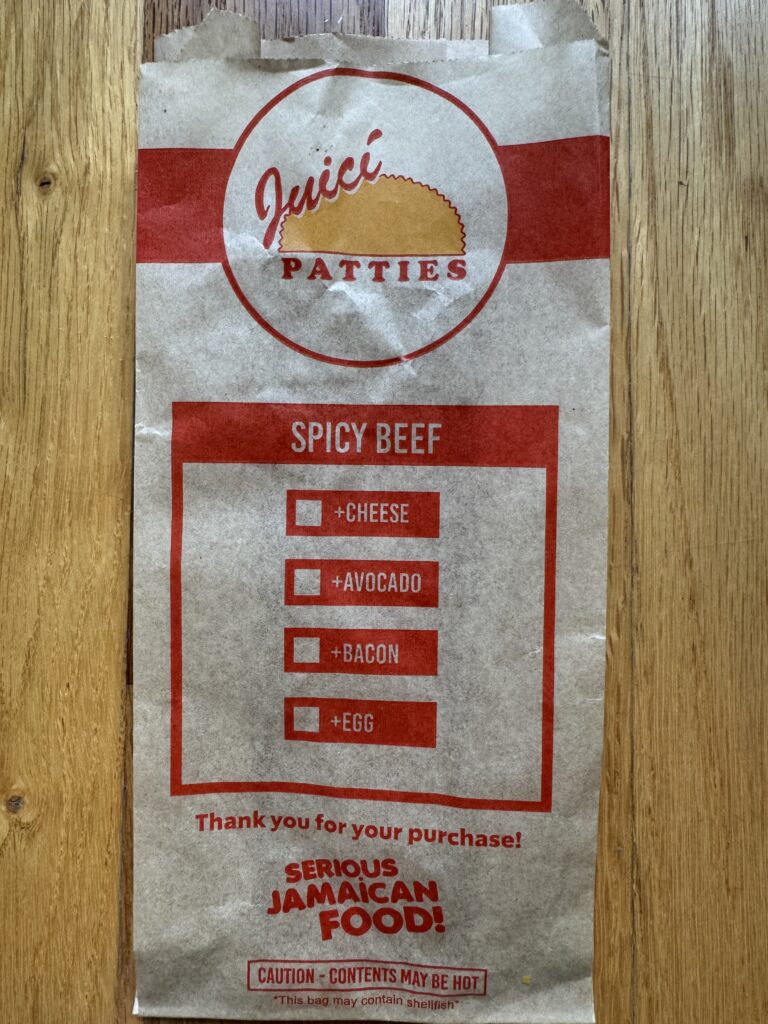
OK, we went on over and did a head-to-head Jamaican beef patty taste-off. As the above wrappers indicate, we compared the spicy beef.

None of this randomization, tea-tasting crap, we just kept taking bites of each patty until they were done.

Both were good, but the classic Golden Krust was definitely better than the newcomer, Juici Patties. The Golden Krust patty had a more delicious filling which was also better integrated with the crust. By comparison, the Juici Patty had a bit too much crust and was too empty inside—it didn’t work as well as a whole. Also the Golden Krust patty was $4.05 and the Juici was $4.25.

In summary:

1 Golden Krust patty > 1 Juici patty >>>> 1/1381 of a conference featuring Grover Norquist, Gray Davis, and a rabbi.

Failing upward, Norwegian style

Wendy Moore, in a review of a book by Oliver Basciano, writes:

Leprosy is caused by a bacterium, Mycobacterium leprae, first identified by a Norwegian doctor, Gerhard Armauer Hansen, in 1873 . . . Convinced, wrongly, that leprosy was hereditary, he spurred Norway to introduce the Seclusion of Lepers Act (1885), which enabled the authorities to remove people from their families to isolated leprosaria.

OK, fine, everybody makes mistakes, better to err of the side of caution bla bla blah.

But then comes this stunner:

After Hansen injected a virulent strain of the disease into the eye of one patient, Kari Nielsdatter Spidsøen, without her consent, she took him to court. He was stripped of his hospital post in 1880, but continued to oversee Norway’s leprosy policy.

Whaaaa?

Further research (i.e., I went to the Hansen’s wikipedia page) yielded this:

Hansen had attempted to infect at least one female patient with the nodular form of leprosy without consent, and although no damage was caused, the case ended up in court and Hansen lost his post at the hospital.

“No damage was caused,” huh? He just injected her in the eye, that’s all. No harm, no foul, I guess.

Just amazing that he continued to run government policy after that. Kinda reminds me of how noted terrorist John Poindexter was tasked by the U.S. government to run a terrorism prediction market. I guess it makes sense—he was a true expert on the topic.

Also reminds me of that unfortunate psychology researcher who keeps coauthoring fraudulent research papers, got disciplined by MIT, and then left for a prestigious chair at Duke University, ran an advice column in a major newspaper, and had a TV show made about his research. Actually two TV shows: one is a highly critical documentary and another is a fictional show where a character based on him is the hero.

Or that political figure, I can’t remember his name now, who keeps citing discredited, fraudulent, fake, and racist research claims, and at the time of this writing he remains in charge of health policy in a major industrialized country.

Some people end up in prison for minor crimes. Other people do things like inject people in the eye with a virulent strain of leprosy, and they get to make government policy.

What does it mean when different articles published by different people on the same topic have nearly identical titles? (“A novel nutritional supplement reduces postprandial glucose response in healthy individuals in a randomised, placebo-controlled, crossover clinical study”)

Sanjeev Sripathi writes:

I came across a firm that seems to be offering a miracle product – https://letsmoderate.com/products/sugar-slayer . Their claim is that ingesting it hammers your post-meal blood sugar spike down by 40%, and they have multiple studies to back it up: https://letsmoderate.com/pages/science

What stood out to me as weird:

(1) These three articles were published at different times by different people but follow the same format for the abstract and text and arrive at nearly the same very large effect size for the same product (the one being sold): https://www.mdpi.com/2072-6643/16/14/2237 , https://link.springer.com/article/10.1186/s41110-024-00275-6 , https://link.springer.com/article/10.1186/s41110-024-00294-3

(2) The other listed articles seem to have been fetched by doing a search for ‘mulberry extract’, which is the critical active ingredient. Whatever I can access does show a notable attenuation on blood glucose and studies exist all the way from 2007 to 2022, thought the impact varies a lot.

(3) These 3 studies are eerily similar to the first 3 I’ve mentioned here: https://www.liebertpub.com/doi/10.1089/jmf.2014.3160, https://link.springer.com/article/10.1186/s12986-021-00571-2, https://journals.plos.org/plosone/article?id=10.1371/journal.pone.0172239#authcontrib . But they’re from 2007, 2015 and 2024, across 3 sets of researchers, which just seems very odd. Is this how everyone is meant to name their papers? i.e. is there a social pressure sitting outside these groups pushing them into common convention?

I’m sure you’d identify more elements if you took a look at it. I’m just unclear if I’m jumping at shadows.

I was curious so I clicked on the link. From the letsmoderate site:

Here are the titles of the first three articles listed in the above email:

A Novel Nutraceutical Supplement Lowers Postprandial Glucose and Insulin Levels upon a Carbohydrate-Rich Meal or Sucrose Drink Intake in Healthy Individuals—A Randomized, Placebo-Controlled, Crossover Feeding Study

A novel nutritional supplement reduces postprandial glucose response in healthy individuals in a randomised, placebo-controlled, crossover clinical study

A ready-to-mix nutraceutical supplement (GLUBLOC) lowers postprandial blood glucose levels in healthy individuals — A randomised, placebo-controlled, crossover study

All the above authors are from India but with no overlap in the author list.

And here are the titles for the other three:

Mulberry Leaf Extract Improves Postprandial Glucose Response in Prediabetic Subjects: A Randomized, Double-Blind Placebo-Controlled Trial

Mulberry leaf extract improves glycaemic response and insulaemic response to sucrose in healthy subjects: results of a randomized, double blind, placebo-controlled study

Mulberry-extract improves glucose tolerance and decreases insulin concentrations in normoglycaemic adults: Results of a randomised double-blind placebo-controlled study

The first one’s from Korea, and the second and third are from England, with some overlap in the author list.

I agree that it’s weird that the papers have nearly identical trials. But I don’t know how things go in the medical literature. Maybe this is standard practice?

I’m not planning to fork over 799 rupees for 30 tablets of Sugar Slayer. One of the article says, “Alkaloid- and polyphenol-rich white mulberry leaf and apple peel extracts have been shown to have potential glucose-lowering effects, benefitting the control of postprandial blood glucose levels,” so maybe I’ll just eat an apple.

Jamaican me crazy yet again

Regular blog readers will remember Golden Krust, source of our standard unit of currency. (Sorry, Peter Thiel, we don’t take bitcoin.) The above picture is kinda blurry but it gives you a sense of the neighborhood.

But here’s the big news! A new Jamaican beef patty place has appeared, right across the street:

Zooming in, it looks like it’s opening in two days:

I’ll be back soon with a full report (but nothing more on this story).

P.S. We did a taste test! The story is here.

“Q collar” promoters have no shame, advertising their discredited research on social media using lying, cheating chatbots

In a distressing update to an already distressing story, James Smoliga writes:

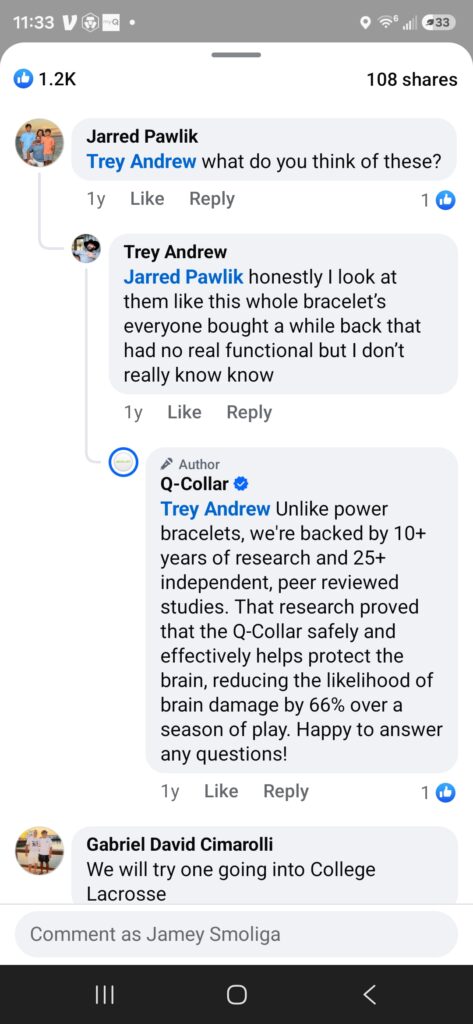
Q-collar is ramping up its fall sports campaign. Lots of buzz on Facebook, with misleading comments from the company, new ways of spinning the FDA disclaimers, and plenty of excited parents.

People are also now posting AI generated summaries which mention the research – but skip the Expressions of Concern, etc.

Here’s some examples, happy to provide more!

Wow, those chatbot-generated evasive responses (“You are absolutely right, and we never want to gloss over this”) . . . what a bunch of assholes! This is the sort of dishonesty we could expect from an outlet like Wolfram Research.

Matthew Walker, Brian Wansink, Cass Sunstein, and various other professional-avoiders-of-inconvenient-facts could lean a lot from these guys on how to pretend to respond to criticism without directly addressing it.

As is so often the case, the threat from AI is not the AI doing malevolent things on its own; it’s bad actors using AI capabilities to manipulate humans.

The next step, I guess, would be to get some official promotion from the U.S. Department of Health and Human Services, by way of some strategic campaign contributions. Maybe they could arrange some contract to put the Q collar on the updated Mount Rushmore, something like that? Just spitballin here.

P.S. Just to remember: Yes, real brains are at stake here. This is evil.

P.P.S. I can see why there’s so little reaction to this story, as this sort of little violation of human dignity is nothing compared to the official legalization of corruption, as in this story that contains this Orwellian line from the Treasury secretary: “Treasury is eliminating a burdensome reporting requirement for millions of law-abiding business owners without compromising our national security.”

Lots of detail on the continuing “Q collar” scandal and why we should probably be doing more coverage of that sort of science-adjacent medical scams and less on repulsively self-promoting but ultimately less harmful academic grifters.

The Q collar, I hope you don’t remember, is a neck accessory that is advertised as “proven” to protect athletes’ brains, but the studies purporting to offer this proof are suspect.

This is an interesting example of science-adjacent incompetence or fraud or grifting or whatever you want to call it, as it overlays junk science with big business (according to journalist Stephanie Lee, the device costs at least $200 and “investment in the Q-collar has totaled more than $30 million”), the government (including the U.S. Army, a U.S. senator, and the Food and Drug Administration), news and social media, and some aspects of the scientific establishment (medical journals).

You can think of Q collar as a baby version of health scams promoted by wealthy and powerful medical-adjacent celebrities such as Dr. Oz, Andrew Huberman, and RFK Jr. It’s junk science, but junk science with a purpose, in this case not so much to promote an ambitious social climber (as with Agus and Arday), it seems to be more about the money. And in that way it could be seen as a more typical (if less dramatic) example of a science scam. It doesn’t involve any plagiarized giraffes or implausible claims of ultra-marathoning, just the exploitation of people’s legitimate health concerns and the lure of the filthy lucre.  It could even be that the scammers believe their own claims (remember, the first step is to fool yourself; the rest then comes easy) and believe they’re doing well be doing good.

We should probably be doing more coverage of science-adjacent medical scams like the “Q collar” and less on the repulsively self-promoting but ultimately less harmful Aguses, Ardays, Wansinks, Hausers, and Arielys of the world who each in his way degrades the reputation of science but isn’t so closely locked in to a moneymaking scheme. (OK. I guess Wansink did ok as a consultant, and Agus and Ariely founded a few businesses which probably netted them a good chunk of change.  They might well be first-class wealthy, even if not in the private-jet stratum.)

Here’s a Q-collar update from science sleuth Mu Yang:

Two new articles on Q collar came out today:

The duplicated tables are almost cute compared to the real issue yet to be addressed. — I mumbled about it in a comment to your post back inJanuary.

Basically, the design is what one would use to teach “confounding factor” in Stats 101:

  • 5 studies (3 on Q collar and 2 on helmet type) reported data from subjects from the same cohort.
  • The subjects in the helmet studies are the controls from the Q collar studies.
  • Two types of helmets were worn by Q-collar-controls, and helmet type had significant impact on brain white matter parameters
  • What helmets Q collar subjects wore is unknown.
  • Q collar is said to affect the same brain white matter parameters as helmet type, in the same direction (the good one)

I [Yang] wrote more about it here and posted on Pubpeer.

Things are at a standstill. The authors have been contacted many times (and I made sure that they are notified about my Pubpeer posts), but remain reticent. It seems that FDA does not care.

Awhile later, Yang added:

Due to the incurable stubborness of some of us, we have been digging deeper in the Q collar junkyard long after Stephanie’s article, your blog post, and the BMJ article.

To put it extremely simply: The control subjects in the Q collar studies were described in two studies on helmet types —which were shown to have substantial impacts on the same brain imaging metrics as Q-collar does. Given controls and Q-collar subjects were students in the same schools, Q collar subjects likely also wore different helmets. BUT, this key confounding factor was never mentioned, quantified, controlled for, or discussed in Q collar papers. I commented on this here. Following that, Dr. M. Shane Tutwiler, a quantitative researcher in the field of educational psychology in the University of Rhode Island, became interested in the case, and wrote a very comprehensive comment on Pubpeer. Shane’s detailed analysis argues that the design and analysis of one of the key studies are grossly inadequate to support the claims of the study—which was crucial for the FDA clearance.

Before posting on PubPeer, Shane spoke to the authors directly to alert them of his concerns and request the data—the 2021 article has a data sharing agreement—but they denied his request because he was critical of their work.

This “silly” and “messy” case is looking much worse than previously thought. However, Dr. Smoliga and I are being stonewalled by SAGE — the six papers under EoC never moved forward. Dr. Tutwiler’s reports to Wiley are also not getting meaningful replies.

We are wondering if you are willing to take a look at the new thread of evidence and weigh in.

My quick answer is that the story seems clear enough already, even without this new thread! I also noticed that one of the authors of one of the papers under discussion is certain “Jeffery N Epstein.” Not the same guy, and I’m guessing that my Columbia colleague Richard “Axel” Foley wouldn’t spend any time responding to his emails.

But I digress.

To return to this horrible “Q collar” story, Shane Tutwiler writes:

I just wanted to close the loop, as it were, on the “Investigation” of the paper I evaluated on PubPeer. The authors shared the data with the editors, and the editors were seemingly content that the paper was perfectly fine as-is (despite many of the issues I pointed out being raised in peer review and ignored by the authors and managing editor at the time). Wiley has closed the case (see below).

If this were a run of the mill journal article that nobody was going to read, I wouldn’t feel so upset. But this research was used by the FDA as part of the evidence chain to justify the device’s use in public. It’s one of those cases where questionable analyses can have real world consequences.

Without any additional knowledge of this particular case, just based on my general understanding of such things, my guess is that the journals’ decision to do nothing here is motivated less by corruption and more by simple laziness. If you retract an article, the authors can scream at you. If you do nothing, people like Tutwiler and me will scream at you . . . but people like us are much less dangerous than authors who refuse to let go of bad research: Those people have money and reputations on the line and can lash out or even sue! So safer to just do nothing and pretend that all is well. The turtle strategy was not so effective recently with Cambridge University, but usually it works just fine, so I guess I can understand why the editors are doing this, even though I think it’s unethical behavior on their part.

And James Smoliga adds some additional context:

The investigation we raised with the Journal of Neurotrauma has been ongoing for over two years now. In the 10 months since the Expressions of Concern were issued, no further action has taken place.

Those six papers are separate from the one that Shane flagged to Wiley… And importantly, that study was the key one that resulted in the FDA’s authorization of the product, which further generated millions in venture capital investment, DoD funding, and consumer purchasing.

This is a mess at every level – improper statistics, inappropriate interpretation, sloppy errors, and allegations of p-hacking (an admission from a collaborator on their research, who doesn’t seem excited to publicly state this).

If you have any interest in writing more about it, or know of any journalists who may be interested in covering this story further, any help is appreciated!

I know lots of journalists, but they usually don’t like covering this sort of story. The outlet most likely to cover it might be Defector, but I don’t know anyone there. Actually, it would fit wonderfully into their Only If You Get Caught podcast. Maybe I can do the contacts-of-contacts thing and see if I can reach anyone there to make the suggestion.

The New York Times already had this article in 2022 that was critical of the Q collar, so I don’t see them running more stories on it. Once you get to the point of junk-science-is-refuted-but-still-keeps-on-making-money, you’re entering “dog bites man” territory, no?

Maybe you could convince noted science skeptics Sean Carroll and Steven Levitt to cover this story . . . ha ha, just kidding! More seriously, maybe If Books Could Kill would be interested, but I don’t know them either.

P.S. More here.

Survey Statistics: wanting workflow

Last week Andrew commented that we need a more transparent workflow for survey statistics. So I looked in the new Bayesian Workflow book:

Chapter 19 “Building up to a hierarchical model: Coronavirus testing” is a case study about a 2020 survey that tested n = 3330 residents of Santa Clara County, California for SARS-CoV-2 antibodies (Bendavid et al. 2020a, 2020b). y = 50 people tested positive.

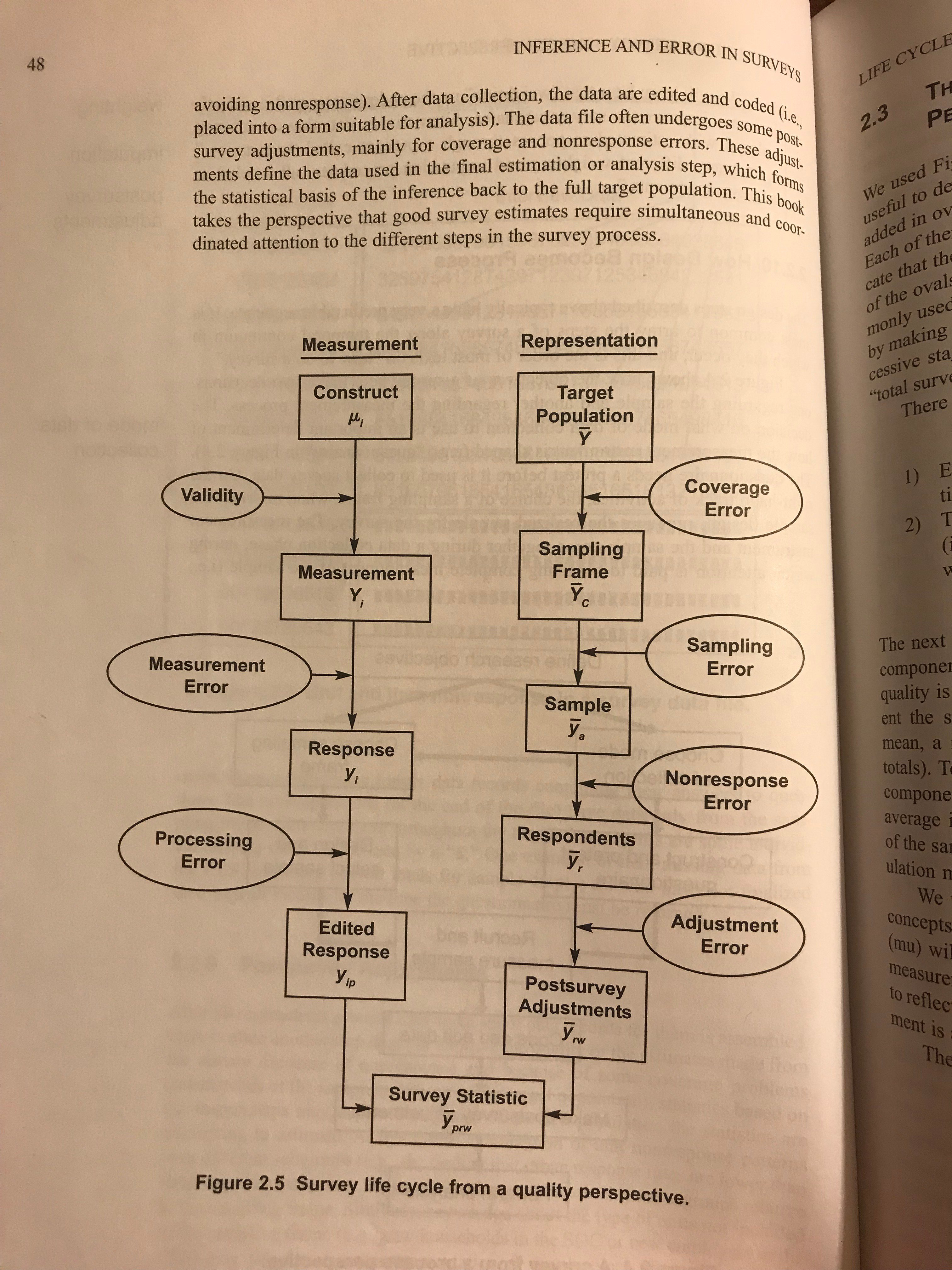
To estimate population prevalence, they want to account for measurement error in the test (“Measurement“) and differences between sample and population (“Representation“), both sides of Groves et al. Figure 2.5:

Image

The measurement error model includes specificity gamma = P[test negative | no disease] and sensitivity delta = P[test positive | disease], which take population prevalence pi to test positivity rate p:

Bendavid et al. (2020a) analyzed their data using gamma = 0.995 and delta = 0.80. But these aren’t known exactly, so Gelman and Carpenter 2020 recommended using priors from previous studies to reflect uncertainty:

They extend these priors to account for multiple studies. They look at sensitivity to these priors (overloaded term here: “sensitivity”). Cool stuff !

In this Survey Statistics series we hadn’t yet talked about models for measurement error in the outcome variable y. We’ve seen measurement error in an adjustment variable X, e.g. recalled vote (“is a mismeasured X better than none at all ?”, “more adventures in mismeasured X”, “more on recalled vote”, “it is (still) the people”).

On the “Representation” side, Bendavid et al. (2020a, 2020b) adjusted for differences between sample and population using weights and encountered the difficulty we saw last week: adjusting for lots of variables can lead to very large weights. Maybe modeling can help (see last week’s “structured MRP to smooth survey weights”).

So Gelman and Carpenter 2020 proposed replacing (19.2) above with

y_i ~ bernoulli(p_i)
p_i = (1-gamma) (1 - pi_i) + delta pi_i

and using Multilevel Regression and Poststratification (MRP):

I thought this story sounded familiar and remembered Andrew talked about it at his Birthday workshop‘s closing talk (this part on YouTube, minute 2 to minute 8).

Andrew said that when his friend tried the method from Gelman and Carpenter 2020 it “crashed and burned” ! There is a new paper about this: Kuh, Kennedy, Chen, and Gelman 2026. They present “a statistical workflow for diagnosing unexpected results in complex models”. These authors have researched a lot about evaluating MRP models (see “should MRP workflow include LOCO-CV ?”). We will have to revisit their new paper later in this series.

Was this USDA survey really “redundant, costly, politicized, and extraneous”?

Joshua Brooks writes:

I know you’ve posted on the topic more generally but don’t recall if you’ve discussed this in particular. Given the timing in relation to cuts in food assistance, It seems a particularly egregious example of the politicization of data.

The news article, published in late 2025 by an organization called Food Tank (“The Think Tank for Food”) is titled, USDA Ends Key Food Security Report, Leaving Advocates in the Dark, and it begins:

The U.S. Department of Agriculture (USDA) recently announced it will terminate its long-running Household Food Security annual report. The resource is one of the country’s most comprehensive tools for measuring hunger and food insecurity.

The USDA justified the decision as a cost-saving measure, claiming in a statement that the survey is “redundant, costly, politicized, and extraneous.” . . .

Produced for the past three decades by the USDA’s Economic Research Service (ERS), the report offers insights used by researchers, policymakers, and advocates working to reduce food insecurity in the U.S. Anti-hunger advocates argue the move will make it far more difficult to track the impacts of policy changes, including recent cuts to the Supplemental Nutrition Assistance Program (SNAP). . . .

Although advocates are looking for options to fill the research gap, Karen Perry Stillerman, Deputy Director of the Union of Concerned Scientists argues that there are no options that match the scope. “How are the data redundant?” she asks. “The USDA survey serves as the official data source of national food insecurity statistics.”

I followed the link [here’s a version from the Internet Archive] and here’s the USDA’s official statement:

Ummmm, what is this? The Ministry of Propaganda?? Imagine what’s it’s like if you’re a normal person working for the USDA, you just want to do your job, but this is the kind of crap you have to deal with.

But I have a serious question here. The USDA claims that the survey is “redundant, costly, politicized, and extraneous.” Just to go through these:
– I guess the study could be “costly”; to assess whether it’s too costly to be worth it, I guess you’d have to talk about its benefits.
– The study could be “politicized,” but nowadays just about everything is politicized, so that seems kind of irrelevant.
– I can’t see why they are saying the study is “extraneous”; it seems very relevant to USDA-related issues.

But the thing I wanted to focus on here is the claim of redundancy. The USDA says the study is redundant, while the advocates say, no, the data aren’t redundant.

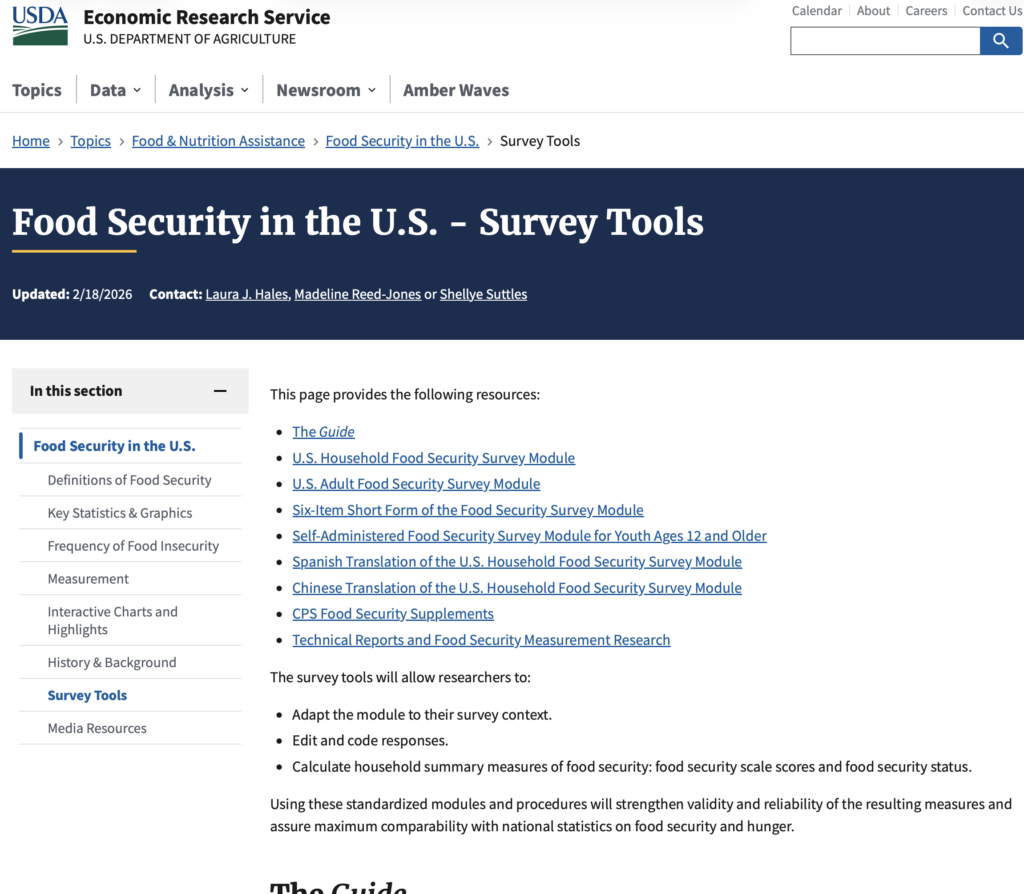
One way for the USDA to address this is to give users help on how to get the equivalent of these data from other sources. I did a quick google and found this page on the USDA’s website:

This seems more serious. I assume the people who are in charge of this webpage have no connection to whoever is the hack who wrote that earlier press release.

So here’s my question. Do the data described on that linked page provide the equivalent information to the now-canceled Household Food Security annual report? Actually, both the Food Tank news article and the USDA press release leave me confused, as they refer both to a “Food Insecurity Survey” and to “Household Food Security Reports.” Does that mean they’re canceling a survey and also canceling a report?

If it’s the survey that’s expensive and redundant, then they could still do the report, no?

The obvious conclusion to be drawn from the ridiculous press release is that the government is canceling the survey and the reports for purely political reasons, some combination of wanting to avoid bad news coming out and ideological opposition to aid to the poor. But it would be good to know if they’re correct in saying this survey is irrelevant.

Maybe I’ll contact Karen Perry Stillerman of the Union of Concerned Scientists and ask what is the basis of her claim that the data are not redundant. Also I can contact the USDA economists on this page. The USDA economists have direct emails; Stillerman doesn’t, but there’s an email given for her media contact, who I guess can connect me to whoever is data-knowledgeable at that organization.

I’ll report back to you!

“More bad science from JAMA”

In an abstract entitled, “Statistical dust and sweeping claims about maternal warmth,” John Richters and Everett Waters write:

Alley and colleagues draw on mediation analyses of longitudinal data from Millennium Cohort Study to argue that their findings “highlight the critically important role that childhood maternal warmth plays in shaping mental and physical health into late adolescence” (p. 716), and “suggest public health interventions aimed at increasing maternal warmth “may be particularly effective in positively impacting adolescent health” (p. 714).

Although the article is dense with tabularized information about key study variables, readers will search in vain for evidence to justify the authors’ conclusions and recommendations related to maternal warmth. What they will find instead are minuscule direct and mediated path coefficients (betas) linking maternal warmth to adolescent outcomes that amount to uninterpretable and unactionable statistical dust. The authors tell us as much in their seductively (if unintentionally) misleading statement that “Social safety at 14 years of age mediated 20% to 100% of the effect of early maternal warmth on physical health, psychological distress, and psychiatric problems at 17 years of age (b = 0.01-0.15; P < .001 for all)” (p. 709). A more straightforward, precise, and informative description of this finding is that social safety at age 14 mediated 20% of maternal warmth’s .01 effect on physical health, 60% of its .01 effect on psychiatric problems, and 100% of its .15 effect on psychological distress at age 17, for a total indirect effect of maternal warmth on subsequent outcome measures of less than 1%. The interpretability of these findings is further compromised by the extreme distributional skew of the 3-item social safety schema latent variable, with the vast majority of adolescents reporting that they had family and friends who helped them feel safe, secure, and happy (86%), someone they could turn to with problems (79%), and someone to whom they felt close (89%). The maternal warmth and harsh parenting measures are also marked by extreme distributional skew, with trained observers reporting that 86% of the mothers exhibited all 5 maternal warmth behaviors and 91% exhibited no harsh parenting behavior during naturalistic play with their children.

The authors do themselves and the readership of JAMA Psychiatry a great disservice by slipping through the normative scientific membrane and conflating statistical with theoretical and practical significance. This is an especially troubling breach within the context of contemporary concerns and public skepticism about the reliability and credibility of social and behavioral sciences research.

References

1. Alley J, Tsomokos DI, Mengelkoch S, Slavich GM. Childhood maternal warmth, social safety schemas, and adolescent mental and physical health. JAMA Psychiatry.
2025;82(7):709-717. doi:10.1001/jamapsychiatry.2025.0815

2. Bogdan PC. One decade into the replication crisis, how have psychological results changed? Adv Methods Pract Psychol Sci. 2025;8(2):25152459251323480.
doi:10.1177/25152459251323480

3. Murray EJ, Swanson SA. Causal inference in observational psychiatry: What do we need to know? JAMA Psychiatry. 2023;80(6):539-540.
doi:10.1001/jamapsychiatry.2023.0343

4. Richters JE. Incredible utility: The lost causes and causal debris of psychological science. Basic Appl Soc Psychol. 2021;43(6):366-405.
doi:10.1080/01973533.2021.1994229

Ahhhh, JAMA!

P.S. JAMA’s not all bad. My colleagues and I recently published a short paper there! Just about all journals are a mix of good and bad.

“A medical journal says the case reports it has published for 25 years are, in fact, fiction”

Retraction Watch reports:

A Canadian journal has issued corrections on 138 case reports it published over the last 25 years to add a disclaimer: The cases described are fictional.

Paediatrics & Child Health, the journal of the Canadian Paediatric Society, has published the cases since 2000 in articles for a series for its Canadian Paediatric Surveillance Program. The articles usually start with a case description followed by “learning points” that include statistics, clinical observations and data from CPSP. The peer-reviewed articles don’t state anywhere the cases described are fictional.

Wha???

Here’s how it came out:

The corrections come following a January article in New Yorker magazine that mentioned one of the reports — “Baby boy blue,” a case published in 2010 describing an infant who showed signs of opioid exposure via breast milk while his mother was taking acetaminophen with codeine. The New Yorker article made public an admission by one of the coauthors that the case was made up. . . .

The move came as a surprise to David Juurlink, professor of medicine and pediatrics at the University of Toronto, who has spent over a decade looking into the claim that infants can receive a meaningful or even lethal dose of opioids via breast milk when their mothers take acetaminophen with codeine. The first such case, published in the Lancet in 2006 by pharmacologist Gideon Koren, was the centerpiece of the New Yorker article. . . .

The Baby boy blue case is “the only such case study, aside from the Lancet case report and the two now-retracted descriptions of the same case in Canadian Family Physician and Canadian Pharmacists Journal,” Juurlink said. “It is the most compelling published description of neonatal opioid toxicity from breastfeeding. And it is wrong.”

And here’s some background:

While the instructions for authors for Paediatrics & Child Health has at times indicated the case reports are fictional, that disclosure has never appeared on the journal articles themselves. . . .

The versions on PubMed Central also do not bear any indication the case reports are fictional.

The surveillance highlights “are intended for paediatric health care providers or physicians in training, and include learning points that briefly translate and disseminate knowledge about the disease or condition,” Elizabeth Moreau, a spokesperson for the Canadian Paediatric Society, told us by email.

To protect confidentiality

The article continues:

The journal decided when it first started publishing the article type “that the cases should be fictional to protect patient confidentiality,” Robinson [editor-in-chief of Paediatrics & Child Health] told us. “Apart from the case that led to the recent New Yorker article, all or almost all were cases of very well recognized conditions (such as congenital syphilis, fetal alcohol syndrome, serious trauma from ATVs, hepatitis C infection) where a single case report would not generate any interest or ever be cited.”

But:

Neither the instructions for authors from 2010 — when Koren and his coauthor Michael Rieder would have written their article — nor the linked list of article types — state the cases are fictionalized, or fictional. A set of instructions dated 2015, and linked from the journal’s author guidelines, indicate the “clinical vignette” should “describe a fictional case.” . . .

In the case of Baby boy blue, “the article was structured as an authentic clinical case, indexed as such, and cited as an actual clinical observation. Readers had no way of knowing it was fictional,” [Juurlink] said. “A narrative that is fictional but published in the format of a genuine case report, without disclosure at the time of publication, is functionally indistinguishable from fabrication in the scientific record.”

I agree with Juurlink on this one. But I also want to make another point, something that Thomas Basbøll and I wrote about in another context.

Setting aside the moral questions involved in presenting fiction as if were fact, and setting aside the specific calamities that arose from the false and, it seems, medically implausible “Baby boy blue” story, I think there’s a bigger problem with these fabricated case studies–even if they are labeled as fictional.

The problem is that, if you make up a case study, you can make it fit your story. A real case study is constrained by reality–and that’s a good thing.

I think it’s a bad idea for the journal to use made-up stories. By using made-up stories, you’re losing a crucial opportunity to learn from clinical judgment.

If you want to change names or circumstances to preserve anonymity, fine. You can still be constrained by what happened in the real case. Making it up from scratch, though, that’s no good. It’s the equivalent of plotting the fitted model without showing any of the data.

The NIH wants to “Measure and Reward Scientific Impact and Replicable Research Practices.” Here’s my recommendation to the NIH director: you can start by no longer suppressing government reports whose conclusions happen to not be in accord with your ideological preferences.

This came in the email from the U.S. National Institutes of Health:

How Would You Measure and Reward Scientific Impact and Replicable Research Practices?

As NIH continues efforts to strengthen rigor, reproducibility, and public trust in science, we are seeking input from the research community on an important question: Are we measuring and rewarding the activities that matter most for advancing biomedical discovery? NIH wants to hear your perspectives on how scientific impact and rigorous research should be measured and rewarded (NOT-OD-26-087). Comments will be accepted electronically here through our Request for Information (RFI) by August 19, 2026.

My first step would be for the government to stop suppressing its own research. A visible example of this was a report from the Centers for Disease Control and Prevention that appears to have been un-published at the direct orders of the NIH director.

So, yeah, one way to “reward scientific impact and replicable research practices” is to let your own damn employees publish their work.

Beyond that, we have lots of ideas, some of which Erik, Witold, and I discuss in our recent paper, A statistical case for qualified scientific optimism.

P.S. I’m posting this right away, skipping the usual 6-month lag, because the NIH is looking for replies during the next two months.

Ph.D. student opening in Sweden on Earth Observation, Data Science, and AI for poverty estimation

Adel Daoud writes:

I’m writing to ask for your help circulating a PhD opening in my group at Chalmers, the AI and Global Development Lab (www.aidevlab.org). The position is in Earth Observation, Data Science, and AI for poverty estimation, the Data Science and AI division (Department of Computer Science and Engineering). We are looking for candidates with a strong grounding in data science, computer science, deep learning, statistics, or similar— remote sensing experience and causal inference are welcome bonus.

Ad and application portal: https://www.chalmers.se/en/about-chalmers/work-with-us/vacancies/?rmpage=job&rmjob=14818&rmlang=UK
Deadline: 20 June 2026.

Here’s the description of their center:

The AI & Global Development Lab fuses AI with Earth Observation to illuminate the causes and consequences of human development across time and space.

Our interdisciplinary team, comprising data scientists, computer scientists, and social scientists, develops methods to better understand the multi-scale dynamics of pressing global issues, including poverty, conflict, sustainability, and the effectiveness of policy interventions.

By analyzing satellite imagery from 1984 to the present, AI search agent swarms for large-scale knowledge discovery, and other planetary-scale sources, we are reconstructing historical and geographical development trajectories at a level of detail never before possible, working to offer new insights into the changing face of development worldwide.

We also invite you to visit PlanetaryCausalInference.org for more information about the causal arm of our project.

They call it “Planetary causal inference,” which seems to fit the themes of this blog.