

The above figures come from this article which is listed on this Orcid page (with further background here):

Horrifying as all this is, at least from the standpoint of students and faculty at the University of Nevada, not to mention the taxpayers of that state, I actually want to look into a different bizarre corner of the story.
Let me point you to a quote from a recent article in Retraction Watch:
The current editor-in-chief [of the journal that featured the above two images, among with lots lots more] . . . published a statement about the criticism on the journal’s website, where he took full responsibility for the journal’s shortcomings. “While you can argue on the merits, quality, or impact of the work it is all original and we vehemently disagree with anyone who says otherwise,” he wrote.
I don’t think that claim is true. In particular, I don’t think it’s correct to state, vehemently or otherwise, that the work published in that journal is “all original.” I say this on the evidence of this paragraph from the this article that appeared there, an article we associate with the phrase, “torment executioners“:
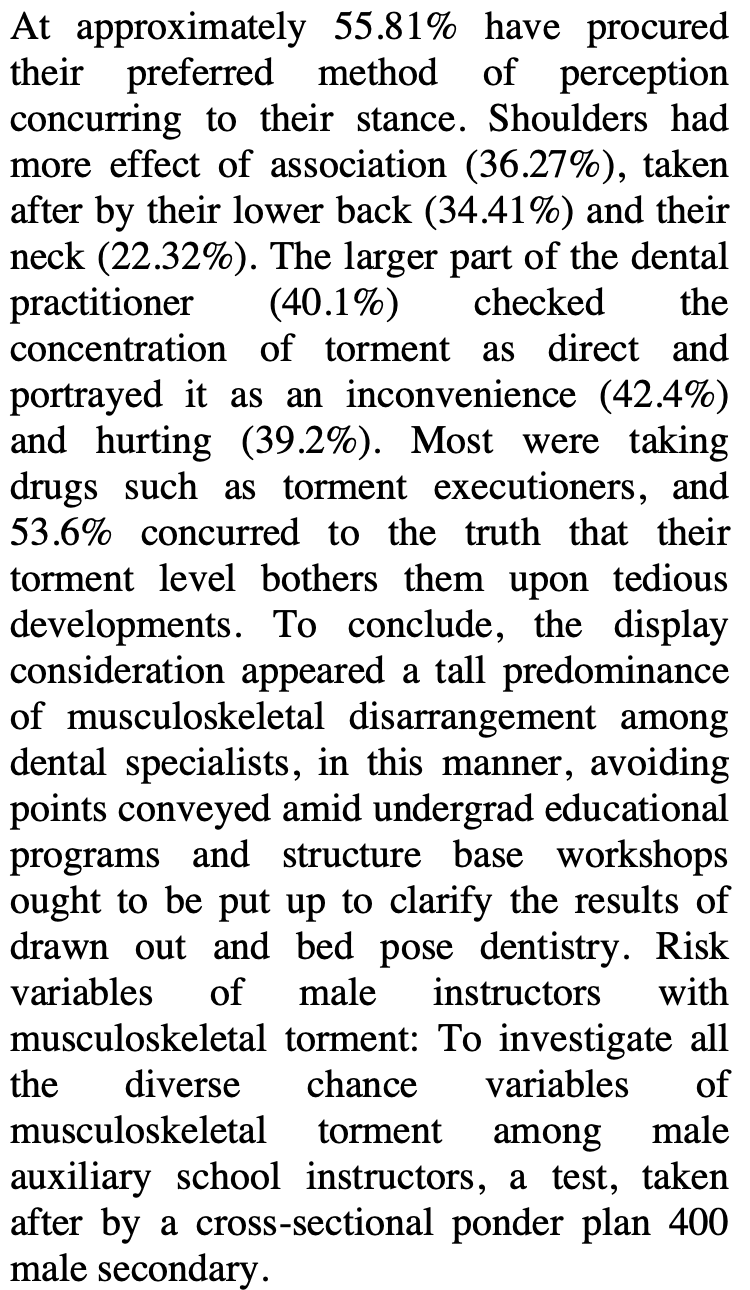
It appears that the original source of this material was an article that had appeared the year before in an obscure and perhaps iffy outlet called The Professional Medical Journal. From the abstract of the paper in that journal:

The scary thing is that if you google the current editor of the journal where the apparent bit of incompetent plagiarism was published, you’ll see that this is first listed publication:

Just in case you were wondering: no, “Cambridge Scholars Publishing” is not the same as Cambridge University Press.
Kinda creepy that someone who “vehemently” makes a false statement about plagiarism published in his own journal has published a book on “Guidelines for academic researchers.”
We seem to have entered a funhouse-mirror version of academia with entire journals and subfields of fake articles, advisers training new students to enter fake academic careers, and, in a Gresham’s law sort of way, crowding out legitimate teaching and researchers.
Not written by a chatbot
The published article from the above-discussed journal that got this all “torment executioners”started was called “Using Science to Minimize Sleep Deprivation that May Reduce Train Accidents.” It’s two paragraphs long, includes a mislabeled figure that was a stock image of a fly, and has no content.
I pointed that article to a colleague who asked whether it was written by ChatGPT. I said, no, I didn’t think so because it was too badly written to be by a chatbot. I was not joking! Chatbot text is coherent at some level, often following something like the format of the standard five-paragraph high school essay, while this article did not make any sense at all. I think it’s more likely that it was a really bad student paper, maybe something written in desperation in the dwindling hours before the assignment was due, and then they published it in this fake journal. On the other hand, it was published in 2022, and chatbots were not so good back in 2022, so maybe it really is the product of an incompetent chatbot. Or maybe it was put together from plagiarized material, as in the “torment executioners” paper, and we just don’t have the original source to demonstrate it. My guess remains that it was a human-constructed bit of nonsense, but I’m guessing that anyone who would do this sort of thing today would use a chatbot. So in that sense these articles are a precious artifact of the past.
Back to the torment executioners
That apparently plagiarized article was still bugging me. One weird part of the story is that even the originally-published study seems a bit off, with statements such as “42% dentist preferred both standing and sitting position.” Maybe the authors of the “torment executioners” paper purposely picked something from a very obscure source, under the belief that then nobody would catch the copying?
What the authors of the “torment executioners” paper seem to have done is to take material from the paper that had been published earlier in in a different journal and run it through a computer program that changed some of the words, perhaps to make it less easily caught by plagiarism detectors? Here’s the map of transformations:
"acquired" -> "procured"
"vision" -> "perception"
"incidence" -> "effect"
"involvement" -> "association"
"followed" -> "taken after"
"Majority of them" -> "The larger part of the dental practitioner"
"intensity of pain" -> "concentration of torment"
Ha! Now we’re getting somewhere. “Concentration of torment,” indeed.
OK, let’s continue:
"discomfort" -> "inconvenience"
"aching" -> "hurting"
"paracetamol" -> "drugs"
"pain killer" -> "torment executioners"
Bingo! We found it. It’s interesting that this last word was made plural in translation. This suggests that the computer program that did these word swaps also had some sort of grammar and usage checker, so as a side benefit it fixed a few errors in the writing of the original article. The result is to take an already difficult-to-read passage and make it nearly incomprehensible.
But we’re not yet done with this paragraph. We also see:
"agreed to the fact" -> "concurred to the truth"
This is a funny one, because “concurred” is a reasonable synonym for “agreed,” and “truth” is not a bad replacement for “fact,” but when you put it together you get “concurred to the truth,” which doesn’t work here at all.
And more:
"pain" -> "torment level"
"aggravates" -> "bothers"
"repetitive movements" -> "tedious developments"
Whoa! That makes no sense at all. A modern chatbot would do it much better, I guess.
Here are a few more fun ones, still from this same paragraph of Ferguson et al. (2019):
"Conclusions:" -> "To conclude"
"The present study" -> "the display consideration"
“Display consideration”? Huh?
"high prevalence" -> "tall predominance"
This reminded me of Lucius Shepard’s classic story, “Barnacle Bill the Spacer,” which featured a gang called the Strange Magnificence. Maybe the computer program was having some fun here!
"disorders" -> "disarrangement"
"dentist" -> "dental specialists"
"so there should be" -> "in this manner"
"preventing" -> "avoiding"
"delivered" -> "conveyed"
"during" -> "amid"
"undergraduate curriculum" -> "undergrad educational programs"
"should be programmed" -> "ought to be put up"
"explain" -> "clarify"
"prolonged" -> "drawn out"
Finally, “bed posture density” becomes “bed pose density.” I don’t know about this whole “bed posture” thing . . . maybe someone could call up the Dean of Engineering at the University of Nevada and find out what’s up with that.
The whole article is hilarious, not just that paragraph. It’s a fun game, to try to figure out the original source of phrases such as, “indigent body movements” (indigent = poor) and “There are some signs when it comes to musculoskeletal as well” (I confess to be baffled by this one), and, my personal favorite, “Several studies have shown that
overweight children are an actual thing.”
Whaddya say, president and provost of the University of Reno? Are you happy that your dean of engineering is running a journal that publishes a paper like that? “Overweight children are an actual thing.”
Oh, it’s ok, that paper was never read from beginning to end by anybody—authors included.
Actually, this sentence might be my absolute favorite:
Having consolation in their shoes, having vigor in their shoes, and having quality in their shoes come to play within the behavioral design of youthful and talented kids with respect to the footwear they select to wear.
“Having vigor in their shoes” . . . that’s what it’s all about!
There’s “confidential dental clinics”: I guess “confidential” is being used as a “synonym” for private. And this:
Dental practitioners and other wellbeing callings in fact cannot dodge inactive stances for an awfully long time.
Exactly what you’d expect to see in a legitimate journal of the International Supply Chain Technology Journal.
I think the authors of this article are well qualified to teach in the USC medical school. They just need to work in some crazy giraffe facts and they’ll be just fine.
With the existence of chatbots, there will never be a need for this sort of ham-fisted plagiarism. End of an era. Kinda makes me sad.
P.S. As always, we laugh only to avoid crying. I remain furious on behalf of the hardworking students and faculty at UNR, not to mention the taxpayers of the state of Nevada, who are paying for this sort of thing. The phrase “torment executioners” has entered the lexicon.
P.P.S. Regarding the figures at the top of the post: I’ve coauthored papers with students. That’s fine; it’s a way that students can learn. I’m not at all trying to mock the students who made those pictures, if indeed that’s who drew them. I am criticizing whoever thought it was a good idea to publish this, not to mention to include it on professional C.V.’s. As a teacher, when you work with students, you try to help them do their best; you don’t stick your name on their crude drawings, plagiarized work, etc., which can’t be anyone’s best. I feel bad for any students who got sucked into this endeavor and were told that this sort of thing is acceptable work.
P.P.P.S. It looks like there may be yet more plagiarism going on; see here.
P.P.P.P.S. Retraction Watch found more plagiarism, this time on a report for the National Science Foundation.
Andrew–
You might want to mention early on in the post that the paper with “torment executioners” is “Ferguson et al. (2020)”, as the latter name is used for it later in the post, and I had to click on a few links to realize it was the same paper. Similarly, the article in the “iffy outlet” is later referred to as “Ali et al. (2019)”, and I had to poke a bit to establish they referred to the same paper. The poking only took a few minutes, and of course doesn’t detract from your point, but it would help readers not immersed in the scandal to see the point more quickly.
thanks for that – I was confused and not sure what was being referred to
I clarified it; thanks.
The phenomenon of “tortured phrases” has been explored by Guillaume Cabanac, Dorothy Bishop, Anna Abalkina and others. See below for some articles that confirm the validity of the type of analysis you used in this case. Nice work.
https://retractionwatch.com/2021/07/19/tortured-phrases-lost-in-translation-sleuths-find-even-more-problems-at-journal-that-just-flagged-400-papers/
https://www.nature.com/articles/d41586-023-02477-w (paywalled)
https://www.thetransmitter.org/scientific-publishing/retraction-she-wrote-dorothy-bishops-life-after-research/
“The present study” -> “the display consideration”
pre-sent’ (verb) = display
study = consideration as in “deserves careful study” = “‘deserves careful consideration”
It’s possible you can get the same sort of word analogies if you translate into a foreign language and then translate back.
BTW, one of the papers in the journal had a lead author with a sufficiently unique name that I tried googling it. The first hit was a student at Fort Valley State University 2019-2023; their paper was published in 2020. Sounds like a class assignment.
Yes, I’m thinking that this particular paper is written by 3 students and professor Jefferson. Given the somewhat foreign names of the students and the HBCU background of Fort Valley State University, I am somewhat sympathetic to the view that it is good to give students (especially undergraduates) an outlet for research – and that research should not be expected to be the same quality we hope for in academic journals frequented by university academics.
The really disturbing thing is that there is so much plagiarized material and, additionally, so much material that makes no sense. Sentences are incomplete, terms are incomprehensible, figures are a joke, and the title of the paper does not relate to the paper (I can’t find the relevance of RFID to the content). I’m still not sure that there wasn’t some use of computer generated content/translation in this article since some of the sentences are so bizarre.
The Professor’s role, in a case like this, is to help students develop their abilities, not just provide an outlet. I don’t believe professor Jefferson even read the work. (there is also the issue of the authors listed on the paper don’t match the authors listed on the journal page linking to the paper). As a role model this is most disturbing.
Agree that this seems to be a case of translating to one language, perhaps then to another, and perhaps then back to English, as an attempted method of “de-plagiarization”
This is funny. My first thought was that it had been run through a weak translator a couple of times- this reminds me of the sort of thing they used to produce. No idea how you might test that though!
This is the second worst story about a teacher misappropriation their students’ artwork that I’ve read today.
https://www.theguardian.com/world/2024/feb/12/art-teacher-sell-student-work-canada
When I was at Berkeley in 2015 there was a rumor going around that Joyce Carol Oates really liked something an undergrad wrote in her seminar; so much that she published it under her own name. Never got enough details on that
https://x.com/JoyceCarolOates/status/1734992406498406697?s=20
https://retractionwatch.com/2024/02/11/engineering-deans-journal-serves-as-a-supply-chain-for-bizarre-articles/
“The elder Jones always had one foot in academics and one foot in business. “He takes risks, and that seems to have worked out well in his life,” says his son.
While working towards his PhD in industrial engineering at the University of Houston in the early 2000s, he supported himself with a job at Arthur Andersen, the accounting firm best known for its role in the Enron scandal.
After the firm’s collapse in 2002, Jones entered the real estate business, obtaining a realtor’s license and a mortgage broker’s license, and founding his first company, PWD Groups Inc., which would morph into the publisher of his future journal.”
https://nevadasagebrush.com/2024/02/07/unr-dean-of-engineerings-questionable-research-papers-arise/
“I’m friends with someone who used to work in that college. Apparently he has turned the engineering college into one of the most toxic workplaces on campus with more than a dozen admin staff leaving the past year. He burned through 5 assistants already. As usual the president and provost are ignoring any complaints made to HR which means they’re ok with people getting hurt.”
This “torment executioner” fits seamlessly with the political style of both UNR and his boss, UNR President Brian E. Sandoval.
Let’s not loose sight of the fact that Erick Jones also put his name on the “torment executioners” paper in the journal’s table of contents even though he does not appear on the list of authors in the PDF itself.
Additionally, the acronym “RFID” only appears in the title and Note from the editor. Dr. Jones actually uses this same method to attached his name to many papers published by his wife.
While not of the same caliber as Torment Executioner (May it live in infamy forever!),
in the same paper is a great substitution of “think about” for “study”. Used in at least two places to describe the “The Worldwide Burden of Disease (GBD) Study”
Note they also substitute “Infection” for “Disease”.
“The Worldwide Burden of Infection (GBD) think about”
Simply glorious!
I was curious why the babies in Figure 2 had rounded projections extending between their legs, sort of like the abdomen extending behind the leg-bearing thorax of an insect. Then I realized that the figures must have been sketched using a baby in diapers as the model! Have a look at this to see what I mean:
https://athome.medline.com/media/catalog/product/cache/7018c0f431b5fb4345af92ab4b01d9b9/P/F/PF155288_HRE03.JPG
Jeez, you’d think that for $372,127 a year, the taxpayers of Nevada could get more competent baby images. What the hell are they paying their dean of engineering for, if not to be making crayon drawings of faceless and diapered babies and then publishing them in a fake journal along with ridiculously bad plagiarism?
On the plus side, we’ve been assured that he’s “a dynamic leader who understands how to seize moments of opportunity in order to further an agenda of excellence” and that he “clearly understands the current landscape for what it means to be a Carnegie R1 ‘Very High Research’ institution.” Again, it’s not just UNR.
“Colorless torment executioners sleep furiously.” I believe that is the key to understanding Matthew Walker’s oeuvre, or, as some wouldve it, his oeuf.
I am a graduate engineering student at UNR. In view of this incontrovertible and extensive history of (willful?) negligence, I am petitioning for Dean Jones’ resignation. Maybe this is in spite of my own best interests, but I have endured far too much scrutiny from myself and others in the name of integrity to allow such brazen exploitation of the publish-or-perish economy to be rewarded. At the very least, I’m not sure I could sleep well without saying something. This affair has vindicated my every fear about pursuing an academic career.
https://www.change.org/p/resign-dean-jones
Are we 100% sure this isn’t a Sokal-like hoax, or an April Fools joke, or something similar? I don’t see how it could be, but other explanations seem inadequate too.
I have read comments from Mr Jones sr, Mr Jones jr and Mr Habib, all of whom claim that the ISCT journal is serious research. These statements can be found in the Retraction Watch article linked above.
I wrote about this saga on Substack. Amazed that the story hasn’t received more attention in the media yet.
https://nickseabrook.substack.com/p/fruit-flies-and-torment-executioners
Good summary. Minor correction Sandoval is the former governor of Nevada, not Arizona.
Thanks – fixed!
In all fairness, one statement in your summary I think is misleading:
“At least one of those grants, a $200,000 award given to Jones in 2020 to study supply chain optimization during the COVID-19 pandemic, is associated with the ISCT article, Future of COVID-19 Treatment Without Vaccine and Painful Needles, which concludes that “it is extremely essential that scientists and researcher should come up with alternate treatment of COVID-19, which are less painful and effective against all variants.”
This sound like many of the publications discussed on this blog that appear to state the obvious (except where they are wrong). However, the grant received was to optimize vaccine delivery in Houston. The work done on that project seemed legitimate to me. I didn’t look at the detailed models (and I’m sure I could take issue with the methodology), but there were models and there was methodology. The publication you cite may not say much, but the grant work had legitimate content. That is why I find it even more puzzling the shoddy, plagiarized, incorrect, and empty-content work in so many publications by Jones, et al. They know better, but they don’t appear to care. Claims that this is an outlet for student work or a link between cutting edge research and application just don’t cut it. It baffles me more than Wansink, more than Ariely, more than Gino, ….
Here is the link to one of the publications from that grant: https://www.frontiersin.org/articles/10.3389/ffutr.2021.732331/full.
The other papers people have been posting are funny. This one is just sad.
It’s like a bad undergraduate paper, by a student who can’t really write clearly and doesn’t really understand what is going on with the modeling, but can sort of imitate the form of research if they have some examples to work from.
I suspect this is the best these people can do. They aspire to an academic career, where they are expected to produce and publish research, but they are not capable of doing so at a professional level. The ISCT journal provided a solution where even bad work could be published, and so they went a little crazy with it, loading up their CVs since that is the path to career success, and seemingly nobody reads papers anyway.
At least that’s my theory.
3rd:
What’s even sadder to me is the message that they are sending to their students, that this sort of thoughtless work is acceptable. The idea seems to be that papers, whether written as class assignments or as research or policy publications, are just a form of busy work, kind of like the sort of worksheets that might be given to students in elementary or middle school, where you fill in all the blanks and hand it in. It all seems so far from the idea that one might actually use engineering methods to solve problems (rather than just finding references saying that problems exist), and it’s horrible to think about teachers at the university level conveying this attitude and demonstrating it by example.
3rdMoment, Andrew
Were your statements referring to the COVID vaccine supply chain paper I linked or some other paper? If it was that supply chain paper then I don’t agree that this is like bad undergraduate work. In fact, the reason for my comment is that this isn’t bad work (admittedly, I haven’t looked carefully at the methodology, but as I said, at least there is some). Contrary to the statement that they are “not capable of doing so at a professional level” I think this paper shows that they are capable of professional work. Hence my bafflement over how/why they are willing to tolerate, promote, and demonstrate such bad work. The most generous interpretation I can think of is that they see these other “publications” as undergraduate or lay person outlets – in which case I am horrified that they occupy the positions that they do. The more likely explanation is that they’ve been able to get away with it and it has generated publications, citations, jobs, and grants, so they do it because it has been successful. Horrifying for other reasons, and damning of many of our academic and research institutions.
Which paper were the two of you responding about?
More for 3rd and Andrew
I looked a bit more closely at the paper I linked. There is plenty to criticize, but I don’t think characterizing it as bad undergraduate work is accurate. I recall my own community’s feeble attempts to allocate the scarce COVID vaccines when they first became available and this grant work for Houston was a better attempt than that. On the other hand, the Jones (2020) paper that is referenced in that work has now been removed from the isctj so I’m not sure what is going on.
Dale:
I agree with 3rd that the paper in your above link looks like a bad undergraduate paper. The other papers discussed in these posts—the train accidents paper, the paper that seems to be plagiarized from an article on dental research, and the baby’s health paper—they don’t look like bad undergraduate papers, they look like desperate attempts by a high school student who has a project due on topic X tomorrow, knows nothing about it, and so desperately search for something—anything—to throw on the page.
In contrast, the “Understanding the last mile” concept kinda looks like a professional paper. Not completely—for example, even in the abstract there are weird things issues such as a word being capitalized in the middle of a sentence and some other bits like “This NSF funded study identified the phenomena of last mile importance” and “The use of electrical vehicles for last mile transportation can help in significantly fighting the climate change” that don’t quite read like English—not huge problems in themselves but indicators that the paper was not carefully thought through.
Then when I read through the paper I find more issues. It kinda reads like a research proposal that is selling the importance of a topic without actually offering anything that can make progress. I guess this almost sounds plausible: “The research which has been performed previously has not incorporated the factors and constraints which affect a vaccine supply chain which can be optimized to reduce the risk of the infection.” But then when you read the paper, it does not present any work to do any of this.
OK, here’s what they promise: “We have defined community health index as a way to identify those communities, which are most vulnerable to COVID-19 and using this in our MIP supply chain model to prioritize highly vulnerable communities with higher service levels to ensure the timely availability of therapeutics to these underserved community. This paper develops a mathematical model to support vaccine allocation decisions based on exposure risk, and operational constraints including capacity of medical centers, vaccine stocks, and routes optimization.” I’m already suspicious, first because if their expertise is supply chains, what are they doing defining a “community health index as a way to identify those communities, which are most vulnerable to COVID-19”? Don’t such indexes already exist? Second, ok, they’re gonna “develop a mathematical model”? OK, let me see it.
I keep reading. The paper has lots of filler that would not belong in a research article, for example figure 1 and table 1 which have readily-available information directly from a CDC report on aggregate covid deaths.
Then they get to supply chains, and there’s more filler.
The first sentence of the supply chains section is, “The current literature on vaccine supply chain is immeasurable and hypothesized.”
Does this sentence look like something that belongs in a serious paper that is supposed to help solve a real problem? No. To me it looks like what unprepared students might write if they have been assigned the task of writing a paper on supply chains.
They continue with a literature review, which, sure, I guess there could be something there. Then there’s a weird bit where they start promoting electric vehicles: “n recent years, with an increased focus on renewable energy and the potential reduction of transportation’s impact on climate change and other environmental issues, the electric vehicles (EVs) have high importance to address these challenges. Project Drawdown describes electric vehicles as one of the 100 best contemporary solutions for addressing climate change (Electric Cars @ProjectDrawdown #ClimateSolutions, 2020). Even though the emissions from the power plants are used to fuel the vehicles, the electric vehicles will reduce the global air pollution significantly Technologies for EV are increasing which include extending driving ranges and reducing costs (Chan and Wong, 2004). The EVs are not only helping in fighting climate change, but also providing more economical mode of transportation as well. According to a study by Idaho National Laboratory (2010), the breakdown for a gas-powered car vs. an electric car comes out to be $9.83 per 100 miles for a gas car and $5.27 per 100 miles for an electric vehicle. When directly compared, the cost to power an electric vehicle is about half of what it costs to fuel your gas-powered car.” That’s an entire paragraph that seems to belong in some unrelated paper. Maybe one of the authors of the paper is an electric-car enthusiast and insisted on putting in that paragraph? It’s weird. Sure, they say, “The use of electric vehicles (EVs) for last mile transportation will help in reducing carbon emission and fighting climate change,” but that’s just a completely separate issue, really nothing to do with the issues nominally covered in the paper.
OK, on to the methodology. There’s a definition of a Community Health Index with no apparent validation of the measure. Figure 2 seems pretty meaningless to me; I guess someone went crazy with some design software.
The mathematical model is written in an unprofessional way, starting with this description of “Sets and Indices”:
f ϵ Producers={ Producer}
d ϵ Depots={D1, D2, D3, D4, D5}
c ϵ Customers={C1, C2, C3, C4, C5, C6, C7, C8, C9, C10}
Sets=Producers ∪Depots ∪Customers
Maybe there’s something here, maybe not, but it definitely looks like the sort of way that an inexperienced student would write a model, not like something that would be supported by an NSF grant.
They continue with some standard definitions of costs and constraints, along with some filler—a couple of maps of Houston. Then they apply the model to some data from that city. I see no link to data or code, nor any description of what they actually did. There’s this description: “We will use Mixed Integer Programming (MIP) for transportation cost along with Q,r Inventory Model to calculate the overall holding cost. We will use the outcome from GIS mapping and Community health Index to prioritize more vulnerable zones in that scenario, so that those who need the medicinal the most can get it on time.” It’s not at all clear that their procedure does what they claim—in particular, they say something about getting medicine (“medicinal”) to people on time, but I don’t see time in the model. In any case, with no available data, no code, and no clear description of what they are doing, it’s not clear what to make of it.
They then present some results which I don’t know what to think about, given that they provide no validations of the model.
If you click on Data Availability Statement, this is what you’ll see: “The raw data supporting the conclusion of this article will be made available by the authors, without undue reservation.” I have no idea what this means; also it doesn’t say anything about code or any details of the model.
It does seem that they ran some computer program fitting some model on some data, but I’m doubtful that this model does what they’re claiming.
In summary, this does not look like professional work at all. If a professional were to do a supply-chain analysis, I’d expect a crisp and clear presentation of the data, the assumptions, the model, the implementation, the conclusions, and the limitations of the work. This paper is lacking in all these steps.
I’m not talking here about any larger goals such as making novel research contributions, relevant practical recommendations, or useful teaching material. Even without asking for any of these (which would usually be expected in an NSF-funded project), I don’t see a basic level of professionalism in this analysis.
So, to me, describing this as “bad student work” is accurate. Not the worst possible student work—they did fit a model, their references are mostly relevant to the topic, they don’t seem to have plagiarized, they did not include any mislabeled images of flies or reindeer, nor did their paper include crude drawings of faceless babies in diapers. If a group of students handed in this as a project, I wouldn’t give a grade of zero, because they did something. They’d get a low grade, though, because of all the problems described above.
And I cannot imagine this work being at all useful for supply-chain management, Covid-related or otherwise, certainly not anything one would expect from purported experts in the field.
Dale:
Let me expand upon my (already long) comment.
You write, “The work done on that project seemed legitimate to me. I didn’t look at the detailed models (and I’m sure I could take issue with the methodology), but there were models and there was methodology.”
I think you’re being way too generous here, and, in this case I fear that generosity to the authors, which might seem like a positive thing (generosity is good, right?) leads to unfair and ungenerous outcomes for others, such as students and faculty at UNR, along with people with worthy projects who were turned down for NSF grants because they didn’t have the sort of superficially impressive-looking CV’s which were padded by papers such as this one.
Again, my biggest problem with this paper is that the authors seem to have done very little and don’t even make clear what they did. You write, “I’m sure I could take issue with the methodology,” but I don’t think that’s correct! They don’t describe enough of their methodology for you to take issue with. To take issue with, or try to evaluate, their methodology would be like wrestling with a ghost.
Andrew
Thanks for the thorough review. I noticed some of these things in skimming the paper but did not attempt to seriously think about them. I was struck by the difference between that paper and the others that were cited. I still think they differ enough to be apples and oranges. Much of the deficiencies in this paper are due to lack of documentation, lack of data, and lack of validation. While it doesn’t meet professional standards, it doesn’t strike me as poor high school work, nor is it worse than many of the decisions made at the time to allocate scarce vaccines.
I think your critique is appropriate. The “model” that was in the paper also struck me as nonsensical (undefined variables, a function with no form and no link to any data), but still different than labeling a reindeer (or elk?) as a white-tailed deer. Maybe the difference is due to the fact that they had a real client (the city of Houston) here. Maybe they actually produced something the city could use, despite the inability to determine whether their findings had any validity – after all, there were vaccines that needed to be distributed and excess demand, so any allocation scheme could “work.” If so, then the evaluation process for the grant seems fundamentally flawed (just as UNR’s hiring practices, NSF decisions, and editorial/peer review processes seem fundamentally flawed).
The issues raised by this work still seem quite different than those raised by the supply chain journal work – perhaps part of a continuum, but quite distinct. At least, they seem different enough to me to make me wonder. If you had given me this paper and asked me if I thought Jones et al had authored it, I would have said no.
I have to say, I do feel a sense of admiration for the skill in coming up with several pages of such low-quality repetitive filler. Most sentences are grammatically correct and not false. I don’t know if I could just sit down at a computer and type up such a thing.
I think that’s a fair critique. I updated the post to note the more substantive output from this grant, although I do think that the question of the extent to which public funding has been used to support the publication of garbage papers in ISCT needs more investigation.
I think I see the linkage between the grant work and those ridiculous supply chain journal papers. There are the ever popular background themes: under-served populations and climate change. There is a terribly flawed process that can be abused for personal gain – in one case, it is a self-published “peer reviewed” journal that nobody reads but generates pubs and citations, and in the other case it is the real and immediate problem of how to allocate scarce vaccines in the middle of a pandemic. Almost any allocation scheme would “work” for overwhelmed public health authorities, especially if they claimed (and perhaps even did to an extent) to address real issues of socioeconomic status and marginalized communities.
The fact that there was more substance to the vaccine supply chain work could be due to two factors: much more money was involved (around $200K rather than $9.99 (or even $199) for a publication) and there were more authors involved than the Jones’ clan. So, the result was a better wrapper for the same bad content. The fact that the key references in the paper’s methodology were to the Jones (2020) publication – which is no longer available – closes the circle a bit for me.
Sentence from paper: According to a study by Idaho National Laboratory (2010), the breakdown for a gas-powered car vs. an electric car comes out to be $9.83 per 100 miles for a gas car and $5.27 per 100 miles for an electric vehicle.
You may be able to come up with the information from the INL 1 page reference, but it sure looks more like it came from this blog:
https://www.enelxway.com/us/en/resources/blog/electric-cars-vs-gas-cars-cost#:~:text=The%20breakdown%20for%20a%20gas,fuel%20your%20gas%2Dpowered%20car.
Wow! Your tax dollars at work. Thanks, National Science Foundation, for spending hundreds of thousands of dollars on this!
The writing really reminds me of the novel “Everything is illuminated”, by J. S. Foer. Too bad this is meant to be research, not art.
I am curious about the co-authors in the ISCTJ papers… are they real people? Are they in on the scam? Do they think this is the way academic publishing is done? Are they aware of the papers? Have they read the papers?
At least one, Rheygan Reed, is a co-author on both the Sleep Train Fly paper and is first author on the Supply Chain Deer Season paper. She appears to be a real person, at one time at Fort Valley State University but now lab manager in Felicia Jefferson’s Neuroscience, Bioengineering and Sleep Laboratory at UNR.
Tom, my honest impression: some are in on the scam (Jones’ family certainly, perhaps some of their closer colleagues); some are incompetent or inexperienced and simply glad to be published.
Others have noticed that some of these coauthors’ names are otherwise absent from the literature but do seem to have been students at Jones’/Jefferson’s respective institutions at the time of publication. This is particularly true of the MUCH less polished papers. My suspicion is that undergraduate students’ coursework has been published unbeknownst to them, or that their inexperience has been exploited with the promise of a “real published paper” as a course outcome.
Dr. Gelman rightly notes that in either case, it wouldn’t be the students’ fault. A professor’s job is to refine student work, and an editor’s job is to curate it. Neither seems to have happened.
I think it is highly inappropriate for any involved students to shoulder any blame etc… and I discourage the invocation/publishing of any of their names. The buck stops with the bosses. My heart goes out to any students who have been victimized by these fraudsters. I can’t imagine how they are feeling these days. I hope their friends, families and other faculty at UNR are providing support.
Oh and because I’m trying to use it every day:
Torment Executioner!
I probably would’ve fallen for this too if I was in their position as an undergrad. I really do feel sorry for them.