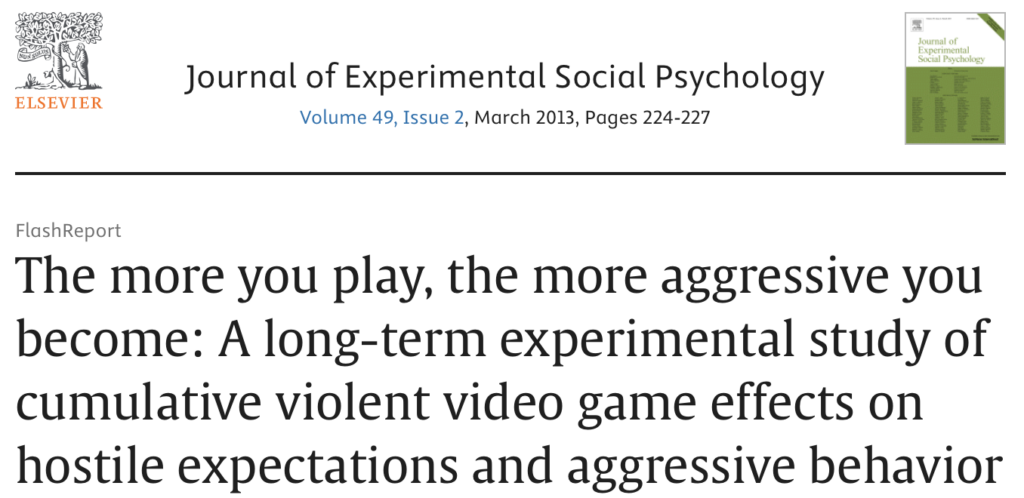
When talking about the problems with science discourse, I often use this example: A 3-day study is called “long term,” and nobody even seems to notice the problem.
And sometimes I use this example: “That a person can, by assuming two simple 1-min poses, embody power and instantly become more powerful has real-world, actionable implications,” even though it had no evidence of anyone actually becoming more powerful.
Here’s my question. What do we call this sort of thing? I want to say “lying,” but that doesn’t seem quite right.
Why not call it “lying”? To lie is to knowingly tell an untruth, and the authors of these statements undoubtedly knew that they were false: the authors of the first paper linked above knew that 3 days is not long term, and the authors of the second paper knew that their study had no data on power. They were knowingly telling untruths in the title of one paper and the abstract of the other.
But it doesn’t quite feel like lying, at least not to me. Why do I say this? Because I think of a lie, not just from the perspective of states of knowledge but also in terms of the motivations of the liar. People lie to hide things, or to avoid being caught, or to make them look better than they really are . . . a lie is a form of cheating. And, just as a lie is not just an untruth but a known untruth, similarly, I think of the act of lying as having a certain intentionality.
Bob Carpenter’s a linguist, so I asked him what we should call this behavior, if not “lying.” His first suggestion was “bullshitting,” which is when people just say stuff without any attempt to be truthful. But that didn’t seem right either: I don’t have the feeling that the authors of those two paper were bullshitting, exactly. I think the authors of those papers thought they were following the rules; indeed, they were following the rules of academic writing. It’s a form of ritualized insincerity, where you write things that sound impressive (“long term,” “instantly become more powerful”) even when these impressive-sounding things are not supported by, or are even contradicted by, available evidence. Bob then suggested the term “exaggeration,” which is closer to the mark than “lying” or “bullshitting” but doesn’t quite nail it either.
So I’m still stuck on this one. You might say that none of this matters: we know what’s going on so why get hung up on naming it. But I think that naming things is important; indeed, we have an entire lexicon devoted to this endeavor.
Why do I think naming is important? I think that when we can give something a good name, it helps us understand the problem better and even point toward a solution. Also, once something’s named, it can be easier to spot it in the wild. That’s the situation with a lot of fallacies, I think.
P.S. Raphael in comments suggests the term “reckless disregard for the truth.” That sounds about right!
Granfalloon?
https://en.m.wikipedia.org/wiki/Granfalloon
That would be a substitute for “liar” in this case but not “lie” per se. We could call it Granfalloonery? The parallel I’m thinking is between and buffoon and buffoonery. In this case it’s saying self important useless things that may, or may not, be true without any consideration for the truth?
Would performative utterances fit the bill? https://en.m.wikipedia.org/wiki/Performative_utterance
“Bullgerating”? A combination of exaggeration and bullshitting.
I guess it’s a kind of puffery? That is, a sort of marketing-speak that has infected some academic writing. https://en.wikipedia.org/wiki/Puffery
The real problem may be that, whereas people expect marketing to be nonsense, we have generally expected better of academic publications.
There’s lots of puffery in academia. I agree. It’s not so much about getting the paper published per se, but about getting it into a prestigious journal, garnering attention (which is thought to increase your chances of getting funding), etc.
It is a kind of obfuscating jargon, like legalese. Reminds me of:
A cow or a chicken on a ranch, or a rat in a research lab is *not* an animal in the eyes of the law. They are cattle, poultry, and research organisms. Thus animal abuse laws do not apply as you would expect from everyday use of the term “animal”.
The biggest offender is probably “significant”. But a typical pattern is something like:
Title: “Improved long-term memory after treatment x”.
Methods: “Long-term memory was assessed using the Morris Water Maze as described before [1, 2, 3, 4, 5].”
The accuracy of the title relies on accepting that the Morris Water Maze task actually measures long-term memory (rather than anxiety, temperature sensitivity, all of the above, etc).
When reading a paper, you cannot assume any term means what you would expect. Almost the first thing to do is go to the methods section (and possibly prior literature) to figure out what the words really mean.
Authors can abuse this jargon to the point it easily misleads a given audience, and are expected to point out any unconventional terms. But in the end its on the reader to find out what the words mean from the methods. There is simply not space in a title/abstract to do this for all terms.
Anyway, the term should capture that the audience is expected to assume one meaning when the author is using another. Further that the author is trying to intentionally mislead the audience into believing the document is more interesting/important than it really is, while not technically lying.
Something like “jargon abuse”, “misnomering”? Maybe use this historical example:
https://www.gotquestions.org/virgin-or-young-woman.html
Too bad almah-ing sounds bad in English. Maybe use a different translation, or choose a similar example as the base for the term.
I vote for “fabulism.”
In particular, wouldn’t the power posing paper be best described as a fable?
Kipling’s concept of “just so stories” seems to fit well here too, but I can’t conjugate that.
Matt:
Maybe the key point here is what Max wrote above, that traditionally we would expect academic writing to stick to the facts. The problem is not so much that these authors are lying/exaggerating/puffing/fabulating/etc., but rather that they are doing so in a tone that would be typically used for factual writing. Kind of like if you were to shoot a movie script in a documentary style and present it as nonfiction.
i think it’s delusion. they are deluding themselves and others.
on the other hand, do they even believe it enough for it to count as a real delusion?
R,
I don’t know. My guess is that these people are so focused, first on their particular research problem, then on the struggle to get the paper published, then on getting funding for the next project, that they rarely step back and check what they wrote to see if it makes sense. I don’t think these are necessarily bad people (whatever that means); I just think they have a certain style of writing and thinking in which part of the game is to make big claims.
So if that:
“Because I think of a lie, not just from the perspective of states of knowledge but also in terms of the motivations of the liar. People lie to hide things, or to avoid being caught, or to make them look better than they really are . . . a lie is a form of cheating. And, just as a lie is not just an untruth but a known untruth, similarly, I think of the act of lying as having a certain intentionality.”
is your definition of lying, then you have to call the authors liars I think. They are knowingly telling the untruth to make their papers (and thus themselves) look better. I think in these cases this is a form of cheating. When you do a 3 day study and say this is long term, this is no exaggeration, it is just false. The rules of academic writing certainly allow you to be imprecise, and they allow you to “forget” all those assumptions that are behind your model and so on, but I don’t think they allow you to call a 3 day study long term.
Huan:
I’d like to agree with you, but . . . de facto, the rules of academic writing do allow you to call a 3 day study long term. That paper was approved by referees and editors, it appeared in a top journal, it’s been cited over 200 times, and, as far as I know, nobody but me has complained about the inaccurate title. I could write a letter to the journal editors asking them to retract the title of the paper, but . . . c’mon, you know and I know that nothing would be done. Unfortunately, the actual rules of academic writing do allow such deliberate false statements to be published; indeed such behavior is rewarded.
I’m not sure we can deduce the rules of academic writing from this paper. Like, if you were to ask 1000 social scientists: “Is it okay to call a 3 day study on humans long term in the title?” I think something like 800 or 900 scientists would say: “no, it is not okay to call such a study long term”.
Or if you take a random sample of 1000 social science papers, take the most dishonest statement from each and rank them from most honest to worst lie, I think calling a 3 day study long term is among the 50 worst.
So why then got this paper published? Maybe this particular journal has lower standards, maybe the referees were overworked and inattentive (nobody does close reading anyway) and maybe it got cited 200 times because all those scientists didn’t read the paper at all. I think (and hope) if you would submit this paper to 100 journals some 80 or so would object to the title.
Huan,
OK, I just sent off the following email to the editors of the journal:
I think the probability is approximately zero that they will do anything. I say this not out of any disrespect to these journal editors, whom I’ve never interacted with in any way, but just from my general experiences in dealing with journal editors regarding already-published papers. But we’ll see.
Andrew, awesome!
I was thinking about doing the same, I think I might still do it, because why not? We probably won’t change how academic publishing works but objecting to a flat out lie in the title of a paper that was cited 200 times seems like a reasonable thing to do.
I have to admit myself, as a reviewer, I tend to not pay as much attention to the titles of papers as maybe I should. If it didn’t say long term in the actual papers it might have slipped by me.
What is the boundary between short-term and long-term?
It’s hard to be precise, and the answer will vary depending on the phenomena being investigated, but for studies of intra-individual temporal behavioral variation in a species that lives 70+ years, the boundary is well north of 3 days.
Bob Carpenter and Jamie solve the problem in their comments below. Apparently, in certain parts of psychology, “long term” is conventionally defined as anything more than immediately afterwards. So, while few people (including scientists) outside the field would understand 3 days to mean long term, it would be understood as such by those most likely to be reading the work.
Gregory:
You write, “while few people (including scientists) outside the field would understand 3 days to mean long term, it would be understood as such by those most likely to be reading the work.”
This may be true of people who read the whole article from start to finish–or maybe not, I’m actually doubtful of this.
But I don’t think it’s the case of most people who read the title or abstract of the article. And the “long-term” phrase is in the title. The author of that paper has been featured uncritically many times on NPR, and I doubt that the NPR reporters, let alone the general audience, would think that “long-term” refers to 3 days.
The author also published a paper in JAMA entitled, “Short-term and Long-term Effects of Violent Media on Aggression in Children and Adults.” In this context, it seems absolutely ridiculous to label 3 days as long-term effects, no matter what is the term of art in the subfield.
In any case, all ambiguity can be resolved by merely replacing “long-term” with “3 days” in the titles and abstracts of these papers. The use of “long-term” allows the authors to have it both ways: It’s a term of art within the subfield but it implies actual long term to outsiders.
I just read the Wikipedia entry on bullshit. The behavior you are describing sure fits the Wikipedia definition of bullshit.
Two quotes from that Wikipedia entry:
In philosophy and psychology of cognition, the term “bullshit” is sometimes used to specifically refer to statements produced without particular concern for truth, clarity, or meaning, distinguishing “bullshit” from a deliberate, manipulative lie intended to subvert the truth.
In his essay On Bullshit (originally written in 1986, and published as a monograph in 2005), philosopher Harry Frankfurt of Princeton University characterizes bullshit as a form of falsehood distinct from lying. The liar, Frankfurt holds, knows and cares about the truth, but deliberately sets out to mislead instead of telling the truth. The “bullshitter”, on the other hand, does not care about the truth and is only seeking “to manipulate the opinions and the attitudes of those to whom they speak”
Yeah, I came here to say this. But perhaps there is a distinction that I am missing.
Bob, Gdanning:
I think the difference is that the authors of these papers genuinely believed they were telling the truth: the authors of the first paper really did think that their study was long term, and the authors of the second paper really did think they were studying how people instantly become more powerful, even though that first study was only three days and that second study had no measures of power. They were using “long term” and “powerful” as terms of art.
But I don’t want to get the authors off the hook too easily. I don’t want to just say that, in their fields, the terms “long term” and “powerful” have technical meanings that diverge from normal English usage, because I also think the authors are taking advantage of linguistic ambiguity to claim that their papers really do have something to say about the long term (in the usual sense of the phrase as it would apply to effects on individual people) and about power.
“I think the difference is that the authors of these papers genuinely believed they were telling the truth: the authors of the first paper really did think that their study was long term, and the authors of the second paper really did think they were studying how people instantly become more powerful,”
Wait, but in the post you said
“… the authors of these statements undoubtedly knew that they were false: the authors of the first paper linked above knew that 3 days is not long term, and the authors of the second paper knew that their study had no data on power.”
I’m confused.
Will:
I think they knew the statements were false but they thought it was ok to use the words in the way they did. They knew that 3 days is not long term in the usual sense of how it would be applied to people, but they felt that it was correct in the technical sense that their study was three 20-minute sessions taking place over 3 days and not just a one-shot experiment. They knew they had no measures of power in the usual sense, but they felt that it was correct in the technical sense that they could take what they were measuring and label it as power.
So they’re embellishing?
I think of it as “grandstanding”.
https://dictionary.cambridge.org/dictionary/english/grandstanding
Bullshitting is the proper term
Did you ever ask the authors about how it happened?
I feel like there is having a category of names for the impact of the inaccuracy in how the paper is interpreted or received, that should be separate from how it happened (motivations, writing/editing/review/etc)
I don’t have a word yet, but I think Andrew’s point needs more consideration. The reason why language designating individual behavior (lying, bullshitting, etc.) doesn’t quite get there is that this is a social process that individuals willingly participate in. That is, there is a kind of ritual in which claims that the group is predisposed to accept are backed by incantations of various sorts. The correspondence between incantation and valid evidence is coincidental. So it’s largely a community-level phenomenon, and the methodological individualism of our language doesn’t apply very well to it.
Peter:
Well put, and this reminds me of other discussions we’ve had in this space regarding the problems of methodological individualism in social science and in our public discourse. One example I like to bring up is the decline in smoking rates. On an individual level, it seems so hard for people to quit smoking (as in that joke, “Quitting smoking is easy. I’ve done it dozens of times.”), but at a societal level smoking rates went down and down. Which seems like a paradox, given that we tend to think in terms of individual motivations and behaviors. Even when people talk about community-level phenomena, they often use individual-facing terms such as “incentives.”
Good point. I still like grandstanding due to its aspect of getting the approval of others. However, perhaps something like “racing to the top” or (shudder) “virtue signaling” both of which also contain those group aspects?
I’m perfectly fine with calling it lying. Andrew is right that “a lie is a form of cheating” and lying to get published is a form of cheating because so much rides on publication counts, impact factors, grants, and so forth. It may not be as severe as making up data as in the case of Michael LaCour or Francesca Gino (who was recently covered on this blog: https://statmodeling.stat.columbia.edu/2024/03/14/heres-the-unsealed-report-showing-how-harvard-concluded-that-a-dishonesty-expert-committed-misconduct/), but the logical motivations are the same.
There does seem to be a difference, however, between lying even in the small cases above and scholars over selling their conclusions. Writing with confidence sells the article to reviewers, and that style of writing is how most scholars are trained to write. (Though, perhaps that too is part of the problem?)
Scientific Method Acting
John:
I want to see one of these social psychologists really commit to the bit and put on 60 pounds like De Niro did for Raging Bull.
Outside of academia, this is called “selling”
Today’s NYT had an article about a school shooting in Austria that killed ten people. The article mentioned, “Every year since 2021, the nonprofit K-12 School Shooting Database has tracked more than 50 school shootings during instructional time in the United States.”
That seemed rather high, and it turns out that the K-12 School Shooting Database defines school shooting very broadly: “every instance in which a gun is fired, brandished (pointed at a person with intent), or a bullet hits school property (including sidewalks, walking paths, athletic fields, and common areas expected to be frequented by students)”
So, the NYT is not exactly lying, but …. Is that a species of the phenomenon Andrew is discussing re “long term,” or something.
Gdanning:
It makes sense to me that a School Shooting Database would include related events such as guns being pointed at people, but I agree that this is not a shooting. In this case, perhaps the reporter was not lying but was just misreading a document, just as when Aungle and Langer (2023) cited a study and described it as being about poison ivy even thought it wasn’t, I doubt they were lying; I’m guessing they just didn’t carefully read the paper they were citing.
To be clear I have no problem with the database. They clearly explain their methodology and the rationale behind the choices they make.
And you are right; the reporter probably did not even look at the definition. I would hope that a reporter would think twice before using that particular data to provide “context” in an article about a mass shooting, but it is probably not lying. But I would not exactly call it being scrupulously honest, either.
I like pandering. It drives me crazy when I see grad students doing this but it seems to come primarily from the feeling that this is what is expected of them, that this is what academics are supposed to do. Barf.
+1. Seem to hit the nail on the head.
+1. Seem to hit the nail on the head.
I find it interesting, and meaningful, that there’s so much discussion (and disagreement) as to which word is most appropriate. Especially since you’ve posted essentially on the same topic previously.
The debate itself shows no single word can suffice without context. So why try to find exactly which one word is correct?
But why not just go with that the authors are wrong? Why do we want to try to divine intent, which in most often unknowable?
I agree with everyone that “long term” is dishonest. I can easily imagine how it came about: the authors wanted to do a long-term study, they were able to do 3 days, they justified it to themselves (“it’s long compared to some other studies!”), and no editor or reviewer cared enough to stop them. More than once, by the way, I’ve asked that the unjustifiably grandiose title of a paper I’m reviewing be changed. (And then it was changed.)
Somewhat related, this just came out; looks neat:
“On the quest for novelty in ecology” — https://peercommunityjournal.org/articles/10.24072/pcjournal.567/
From the abstract: “The volume of scientific publications continues to grow, making it increasingly challenging for scholars to publish papers that capture readers’ attention. While making a truly significant discovery is one way to attract readership, another approach may involve tweaking the language to overemphasize the novelty of results. Using a dataset of 52,236 paper abstracts published between 1997 and 2017 in 17 ecological journals, we found that the relative frequency of novelty terms (e.g. groundbreaking, innovative) nearly doubled over time.”
It’s a groundbreaking study of long-term effects!
I like “mendacity” for this, but I expect that the rhyme with “audacity” (derogatory) is doing most of the work, there.
Naming the phenomenon requires us to know the extent to which the authors themselves believe their claims. So lying and bullshitting wouldn’t apply here. I like delusion, as per an earlier comment.
Maybe there’s a long German word for this or some kind of Greek word that is no longer used.
For the moment, it may be most helpful to focus on “sugarcoating.
I looked for synonyms for ‘lüge’ (German for ‘lie’), but I could not find anything that would adequately describe the kind of embellishment we are discussing, which are done with reckless disregard for the truth. Unfortunately, we Germans cannot help with a word for the occasion!
Having said that, I do like the term ‘reckless disregard for the truth’. It has a legal connotation and conjures up an image of a perpetrator who does not intend to commit a horrible act, but is willing to do so if necessary. If a student were to produce a three-day ‘long run’ study, it would not be accepted, thus revealing a double standard that I can only attribute to thoughtlessness, i.e. a lack of reflection.
“Reckless disregard for the truth”: I like that!
May I ask a practical question? In my case, I am a junior researcher on a project where one of the participating professors tends to embellish what we are doing. She writes things like ‘no one has *ever* done anything like this before’ or ‘our research is absolutely crucial to filling a major research gap’. While I do think our work is important and not many people have conducted research in the same area, I find this kind of language more than just a little objectionable.
So far, I have managed to discreetly remove these statements from the documents we have produced. However, I might not get away with doing stealth edits for the next couple of years. People might start questioning where the sparkly language is gone😅 Any sincere advice would be much appreciated!
Raphael:
My advice is that, before submitting the paper, you tell your colleague that you are concerned that these kinds of unsupported claims will annoy the referees. You can recommend toning down the language in order to anticipate potential roadblocks in the reviewing process.
‘Appealing to the higher powers of peer review’ – that might just work for someone operating within that paradigm. Thanks!
I agree with Andrew’s suggestion that you should say you are concerned these sorts of claims will annoy the referees. I could perhaps be persuaded that that’s a good idea, but it doesn’t seem right to me for a couple of reasons.
First, it isn’t true. Your primary concern does not seem to be annoying the referees. Lies aren’t always bad — I lied yesterday! — but I don’t think it’s a good policy: 1. lying is somewhat corrosive of one’s own integrity, and 2. little lies like this one, even if not explicitly exposed as false, can still cause problems. For example, what if a referee requests or demands some change that you think is bad, and you want to push back on it? Will the professor say (or think) “hey, I thought you didn’t want to annoy the referees”?
Second, and perhaps more important, you’re missing a chance — a duty? — to try to correct a problem with academic culture. If you think this sort of puffery doesn’t belong in a scientific journal, I suggest continuing what you’re doing: strike it out when editing. If your colleague insists on putting it back in, just say “I’m uncomfortable putting this sort of puffery into a journal. Let’s leave it out.” The conversation might not be easy but it will probably not be too awful, either. And you do have a trump card (which I suggest that you play): “You say ‘no one has ever done anything like this before’, but this is somewhat similar to the work of Schmoe et al. (2013). So I don’t think we can say this.” Or, if you feel that you have to throw her a bone, how about “Let’s edit it to ‘no one has ever done this before'”.
Oops…everyone needs an editor. That first sentence was supposed to be “I don’t agree with Andrew’s suggestion…:, exactly the opposite!
Jeez, it’s like “The History of the Siege of Lisbon”.
Committing to the bit
Two choices… or really analogies.
I think of it as a scientific form of kabuki. It is a ritualized entertainment in which there are specific roles, specific stage settings, specific makeup etc., which is simultaneously completely (and obviously) artificial but intended to represent a higher truth.
To go more vulgar, professional wrestling has the concept of kayfabe, the knowledge that everyone has that the proceedings are fake, but an adherence to form which both delight insiders (who admire the form the artificiality takes) the naive outsiders (fewer and fewer by the day) who think it’s real, and the rest of the public who take entertainment from their knowledge of both the insiders and the naive public.
kabuki or kayfabe. The both begin with “k,” the funniest letter in the English language.
Jonathan:
I too thought K was the funniest letter but then I came across W, and now I’m not so sure.
Your first name ends in W, and my last name ends in K. I rest my case.
Jonathan:
My uncle Woody (full name Woodrow) published a book of Krazy Kat cartoons.
Are you guys having a laugh? (Appropriate!) Everyone knows the answer to this one:
“We must understand that all sentences which begin with W are funny.” — James Thurber, deliberately misquoting Robert Benchley.
Neil Simon, from The Sunshine Boys
Willy Clark: I’m in this business 57 years, you learn a few things. You know what makes an audience laugh. You know which words are funny and which words are not funny?
Ben Clark: You told me a 100 times, Uncle Willy…
Willy Clark: Which words are funny?
Ben Clark: Words with a “K” in it are funny. I have to get to the office.
Willy Clark: Words with a “K” in it are funny. You didn’t know that, did you? I’ll tell you which words always get a laugh.
Ben Clark: Okay, Alka Seltzer.
Willy Clark: Alka Seltzer’s funny.
Ben Clark: Chicken.
Willy Clark: Chicken is funny.
Ben Clark: Pickle.
Willy Clark: Pickle is funny. All with a “K”. “L’s” are not funny. “M’s” are not funny.
Ben Clark: Just “K’s”. I know.
Willy Clark: Cupcake is funny. Tomatoes is not funny. Lettuce is not funny.
Ben Clark: You’ve explained that to me since I was five. Look, I’ve got to get back to the office.
Willy Clark: Cucumbers is funny.
Ben Clark: It’s getting cold out. Let me give you money. I want you to take a cab.
Willy Clark: Cab is funny!
Ben Clark: Are you listening to me?
Willy Clark: Cockroach is funny. Not if get ’em, only if you say ’em.
In cognitive psychology, “long term” and “short term” often refer to memory. Short term memory is usually a matter of seconds or at most minutes, and anything longer is “long term”. For a memory study, 3 days is long term by convention.
I asked GPT, which tells me that the violent video games literature has settled on “long term” to mean anything beyond a single session. So I think this particular example is less bullshit and just too much drift in technical terms. It’s the same problem statisticians inherit by co-opting the term “significant” to mean p < 0.05, which is not at all what a layman means by the term. We could call bullshit on all those significant results, but the authors would just say they were using terms in the conventional way for the field and the authors would be correct.
Along those lines, I think “long term” might also reflect the idea of “not cross sectional” (i.e., longitudinal).
Bob:
I agree about the problem of drift in technical terms, and you could well be right that the authors would just say they were using terms in the conventional way for the field.
But I think it’s research malpractice to use that phrase in the title of the paper, especially given the broad audience to which this work is aimed at. The author of that paper also published an article in JAMA, “Short-term and Long-term Effects of Violent Media on Aggression in Children and Adults.” I don’t think the JAMA article would think of “long term” as being 3 days. From a medical context, if you’re talking about long-term effects of violent media in children and adults, of course you’re not thinking about things happening over 3 days.
If they really want to use the phrase “long term,” they should explicitly define it or refer to the relevant literature. Otherwise I think they’re doing a form of cheating by implying they’re actually talking about what outsiders would refer to as long term. For example, consider this passage from the JAMA article:
That passage does not make a lot of sense if “long term” is 3 days. Consider for example the phrases “more delayed but enduring long-term changes in behavior” and “Long-term increases in children’s aggressive behavior.”
So I think it’s a real problem if they try to have it both ways.
How about bluffing?
Personally I like it because as well as meaning exaggerating or deceiving others about your knowledge or abilities, it’s also known for being a strategy in card games.
And that’s what we’re talking about here right? A strategy in a game?
I believe misrepresentation works well, maybe performative misrepresentation to highlight its ritualized nature
Inflation or overclaiming
Claimflation
Inflatulence
I don’t agree with using the words ‘long-term’ precisely because it may be understood as referring to what we’d mean in common parlance, but I think it’s possible that this is a technical use of the words in relation to the experimental paradigms used to study this. I wouldn’t be surprised if most experimental research looking at video games and violence has had people play video games and then immediately do some other tasks. In comparison, experimental scientists trying to extend this and look at the effects some days later may call it ‘long-term’, and this would be understood by those in their field. Something similar occurs in memory research – essentially only memories studied very shortly after learning or on the same day are called short term memory in some experimental setups, and those that are assessed a day later are referred to as long-term memory – though people WITHIN this field understand that this is not referring to a memory from a long time ago. Even so, it can then happen that owing to the use of common terms, it gets muddied and people both within and without the field fail to keep to the experimental distinction and start overclaiming
Jamie:
I agree. Within the subfield, 3 days could be “long term,” but it’s research malpractice to use that phrase in the title of the paper, especially given the broad audience to which this work is aimed at. The author of that paper also published an article in JAMA, “Short-term and Long-term Effects of Violent Media on Aggression in Children and Adults.” I don’t think the JAMA article would think of “long term” as being 3 days. From a medical context, if you’re talking about long-term effects of violent media in children and adults, of course you’re not thinking about things happening over 3 days.
Yes I saw your response above (“But I don’t want to get the authors off the hook too easily…because I also think the authors are taking advantage of linguistic ambiguity to claim that their papers really do have something to say about the long term”) and I agree.
This feels like one of those things where the the conflation of the terms is very useful (in a bad way) because it allows one to be somewhat duplicitous in promoting the gravity of the findings while also reassuring oneself, or even if not reassuring oneself at least having an explicit defence against critics, that one is in fact operating completely above board and being technically accurate.
It turns out someone came up with a name for this a couple of years ago and it sounds pretty good to me: Importance Hacking.
https://www.clearerthinking.org/post/importance-hacking-a-major-yet-rarely-discussed-problem-in-science
The flowchart there illustrates how Importance Hacking relates to fraud and p-hacking as useful options for getting your paper published in a top journal if you haven’t actually discovered anything important.
(found via Slate Star Codex)
It is lying. The problem is that these people do not feel like they are lying because they have done it so often that they cannot anymore effortlessly notice that they are doing it. I think this is because one of the internal marker of lying is the sense of shame, and if you teach you to lose it, you lose the skill of telling the truth.
It is like teaching oneself how to fail a sport feat, say a volleyball service: if you practice failing long enough, it will become more and more difficult to actually execute it when you need it, because you lose the internal marker on how it is done.
Basically, they have lost the skill of telling the truth. You could argue that if they have lost the skill of telling the truth, they cannot lie. On the other side, they decided to lose this skill, so they are lying.
I think there are even complete (sub)-cultures that never actually learned the skill properly or formally, tbh, and the obsessive insistence on truth is most probably peculiar to the west.
+1 for Jonathan (another one)’s brilliant suggestion of KAYFABE.
The only downside is you have to be lightly familiar in wrestling culture to appreciate the parallels.
Kayfabe is wrestlers’ performance/trick/con that the world of pro wrestling is competitive and unscripted, and that wrestlers’ personas are authentic. Kayfabe is also essentially a professional expectation of the job.
Similarly, many academic communities socialize researchers to continually perform scientific method and brilliant discovery. Punching up our findings is as routine for researchers as the People’s Elbow is for The Rock or the Tombstone Piledriver is for The Undertaker.
Wrestlers/researchers know this stuff is fake but also recognize it as a professional expectation.
(For anyone interested, this JSTOR Daily article nicely introduces some social scientific perspectives on kayfabe: https://daily.jstor.org/real-fake-fake-real-pro-wrestlings-kayfabe-conundrum/ )
1) The referee in wrestling is maybe similar to peer-review in the comparison. It looks like some objective entity is present to make sure things are valid, and work according to the rules, but at the same time they are part of the whole thing and even sometimes play some more explicit role in it all.
2) The training in wrestling is maybe similar to education in the comparison. I reason there is actual real training and skill necessary to a certain degree in the case of both the wrestlers and scientists, but whether that training and skill actually directly relates to the outcome, goals, and actions is perhaps questionable.
For instance, in the case of wrestling there is actual training in the form of weightlifting, training wrestling moves, etc., and in the case of scientists there is education and skill concerning passing exams, reading papers, training statistical methods, etc. However, this may not all directly relate to the actual outcome, goals, and actions while doing the actual job. Additionally, in the case of wrestling there might be performance enhancing drugs that are not mentioned explicitly, which may be similar to things like questionable research practices or the file-drawer issue in the case of scientists. Also, in the case of wrestling it might not be about actually winning based on skill, but about being part of the performance, and in the case of scientists it might not actually be about doing proper science, but more about being part of the performance of receiving grant money, performing an experiment, and publishing a paper.
3) The whole illusion or performance in both wrestling and science might be seen as something real or at least less of an illusion/performance for those that are not (yet) insiders, and for those that are relatively gullible, uncritical, young, and naive.
4) The entire “good guy-bad guy”-thing in wrestling might have parallels in science where there sometimes is some sort of back-and-forth between scientists in a series of “reply to X”-style papers. Or in cases where scientist X replicates scientists’ Y work and finds something else.
From a bigger perspective, the “good guy-bad guy”-thing in wrestling, and the “reply to”-exchange and replications in science only lead to more engagement from people, more media attention, more “matches” and “discussions” and “promos” and “proposals”, but perhaps most importantly more money in the pockets of a few people who might benefit the most from it all.
5) The creators and participants of all the illusions and performances in both wrestling and science might not appreciate being called out, or have “outsiders” comment on things. I think this may have changed a bit in the recent decade or so, perhaps due to the internet. Overall, I think both concerning wrestling and science things are becoming more clear, certain people are seeing more of what’s really going on and sharing their views, and perhaps more of the BS is being seen for what it is.